



Winter outbreak control starts long before the first case. When norovirus or flu reaches a care home or nursery, it spreads quickly through shared rooms, shared equipment and shared hands. The sites that cope best are the ones with the right supplies already in place, in the right rooms, with staff who know how to use them. Those that start ordering after the first outbreak are always a step behind.
This guide explains what to stock now, where to keep it and how to prepare your team. It is written for managers, administrators and facilities leads who look after care homes, nurseries and similar settings, and who want a practical plan before the cold weather peaks.
Why care homes and nurseries need a different plan
Both settings look after people who are more vulnerable to infection. In a care home, residents are often older and may have underlying health conditions. In a nursery, young children share toys, tables and floors, and they put their hands in their mouths constantly. An illness that one person shrugs off can be serious for someone else.
Both settings also keep people close together for long periods. Meals, activities and nap times all happen in shared spaces. When a bug arrives, there are many chances for it to pass from one person to the next. That is why a ready supply of the right products makes such a difference.
Build a stock list around the outbreak itself
Think about what happens when someone is sick, and work backwards. Staff need to clean up a spill quickly and safely. They need protection while they do it. They need to disinfect surfaces afterwards, and they need to wash hands properly. Each of those steps needs a product that is easy to find.
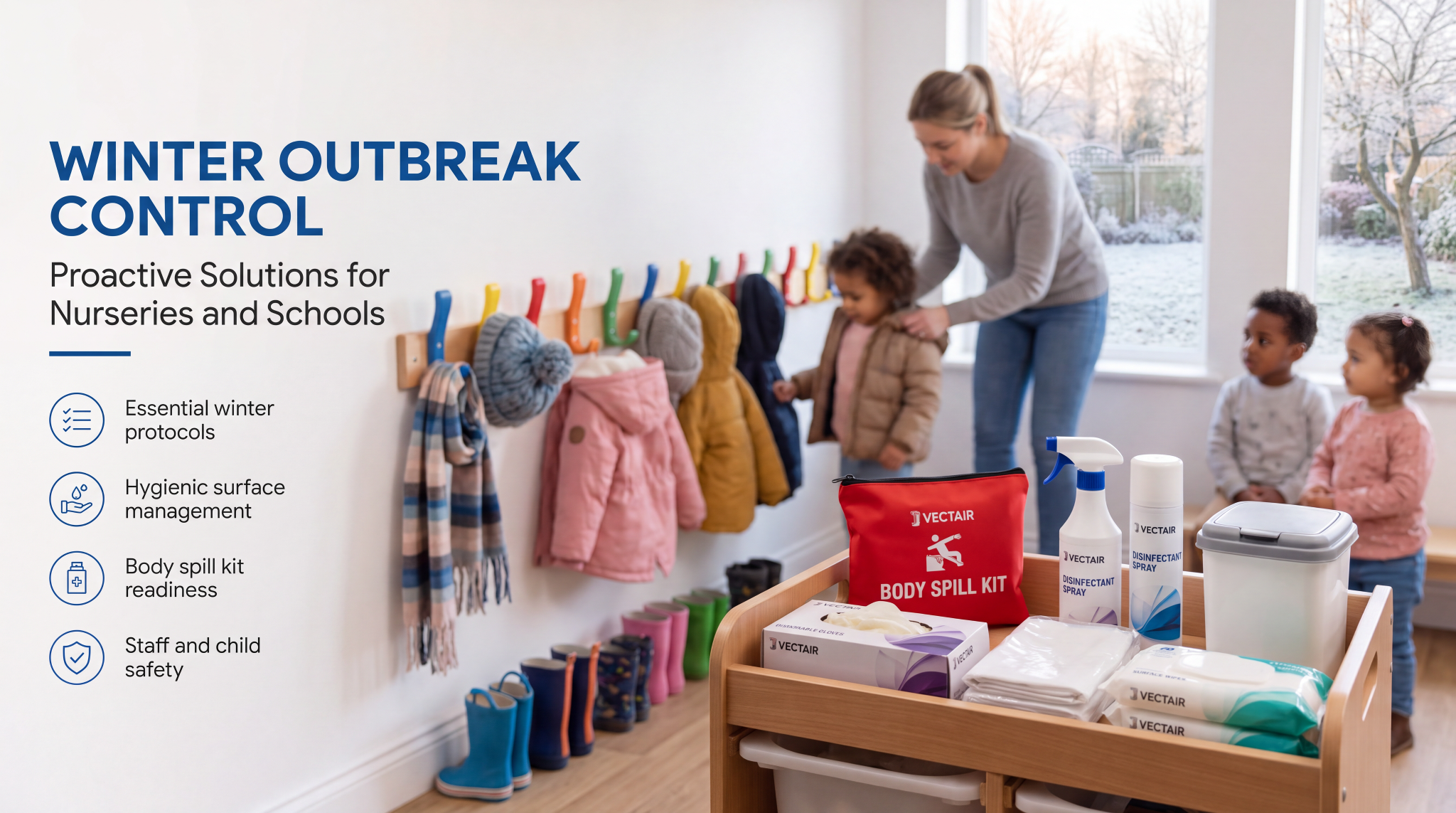
A good outbreak stock list covers four areas. These are body spill kits, personal protective equipment, disinfectants and wipes, and signage and hand hygiene. Work through each one and decide how much you need and where it will live.
Body spill kits
A body spill kit lets staff deal with vomit or other bodily fluids quickly. The faster a spill is contained and cleaned, the less chance it has to spread. Express lists body spill kits, including powders and all-inclusive response kits, within its First Aid and Healthcare range.
Choose a type that suits your staff. Some teams prefer a simple absorbent powder. Others want a complete kit with everything in one pack, so there is no hunting for items in the middle of an incident. Check the contents against your own procedure, and make sure the kit includes what your staff will actually use.
Spread kits across the building. A single kit locked in the manager's office is no use at the far end of a corridor or in a nursery play room. Keep one in each area where a spill is likely, such as dining rooms, lounges, playrooms and washrooms, and make sure everyone knows where they are.
Personal protective equipment
Staff dealing with a spill need protection. At the very least, that means disposable gloves and an apron. Express lists disposable gloves and aprons within its First Aid and Healthcare range, and its PPE and Clothing category covers items ranging from gloves to respiratory masks and goggles.
Think about the situations your team might face. Cleaning a spill calls for gloves and an apron. Close contact with an unwell person may call for a mask or eye protection, depending on your own infection control policy. Check that policy before you order, and make sure your stock matches it.
Put PPE close to where it is needed. A box of gloves in the main store is not much use when a resident has been sick in the lounge. Keep a small supply in each area, and replace it as soon as it is used. Staff need to know how to put PPE on and take it off safely, so build a short briefing into your winter preparation.
Disinfectants and wipes
Disinfecting surfaces after a spill, and in high-touch areas during an outbreak, is a key part of control. Choose a disinfectant that works against the illnesses you are most likely to face, and always follow the instructions on the label for dilution and contact time. Your infection control policy may name specific products, so check it before you order.
Wipes are handy for quick clean-ups. Express lists wet and dry wipes within its First Aid and Healthcare range, and wipes suit the surfaces that people touch most, such as door handles, light switches, handrails and shared equipment. In a nursery, they also help with high chairs, changing areas and play equipment.
During an outbreak, increase how often you clean touch points. A little extra effort at the right moments often does more than a deep clean once a day.
Hand hygiene: soap first
Handwashing is the most important control measure in any setting. For norovirus in particular, washing with soap and water is the recommended approach, because alcohol gel does not work as well against it. Keep sanitiser for times when you cannot reach a sink, and make sure staff, visitors and children can reach soap and paper towels easily.
Express carries soaps, gels, creams and sanitisers, so you can stock the full range from one supplier. Check dispensers regularly during winter, because they run down faster than you expect. A dispenser that is empty at the wrong moment undermines every other precaution.
Signs, kits and changing areas for nurseries
Signs help during an outbreak. Express lists warning signs within its First Aid and Healthcare range. A clear sign on a door or a washroom that is closed for cleaning stops people walking into a contaminated area and tells visitors what to do.
Nurseries also need to think about changing areas. Express lists nappy bins, gloves, sanitisers and wipes in its Baby Care range, along with changing tables with antimicrobial surfaces. Clean the changing surface after every use, and keep gloves, wipes and a lidded nappy bin within reach, so staff never leave a child unattended to fetch something.
Train your team before you need them
Supplies only work when people know how to use them. A short, practical briefing at the start of winter makes a big difference. Walk staff through where everything is kept, how to use a spill kit, how to put on and remove PPE, and who to tell when an outbreak starts.
Include agency and temporary staff in the briefing. They are often the people least familiar with the building, yet they may be the ones on duty when something happens. A one-page guide pinned in each area gives them a quick reminder.
Review your procedure after any incident. If staff could not find a kit, or if a product did not suit the task, change it now. Learning from a small problem prevents a bigger one.
Keep a simple record
A short written log helps during and after an outbreak. Note where and when a spill happened, which kit staff used, and what needed restocking afterwards. This shows you which products and areas get used most, and it gives you a clear picture when you plan next winter's order.
It also helps if anyone asks how you responded. A dated record shows that staff followed the procedure and that supplies were available when they were needed.
Plan your stock and order early
Demand for outbreak supplies rises sharply once the first cases appear locally. Every care home and nursery in the area tries to stock up at the same time, and lead times can stretch. Order before the peak, and hold a buffer of the fastest-moving items, such as gloves, aprons, wipes and spill kits.
Review how much you used last winter. If you ran short of anything, increase your order. If a product did not work well, replace it. Keep a simple stock list for each area, and check it weekly through the winter. A quick check each week costs very little compared with running out in the middle of an outbreak.
Remember that this guide covers supplies, not clinical advice. Always follow your own infection control policy and current guidance from the relevant health authorities.
Frequently Asked Questions
What should a care home or nursery stock for winter outbreaks?
Stock body spill kits, disposable gloves and aprons, disinfectant, wipes, soap and paper towels, along with clear signage. Keep supplies in each area where a spill is likely, rather than only in a central store.
Where should body spill kits be kept?
Keep body spill kits in every area where a spill is likely, such as dining rooms, lounges, playrooms and washrooms. A single kit stored in an office may be too far away when an incident occurs.
Is hand sanitiser enough during a norovirus outbreak?
No. Washing hands thoroughly with soap and water is the recommended method for norovirus, as alcohol-based hand sanitiser is less effective against it. Use sanitiser when a sink is unavailable, but do not use it as a substitute for handwashing.
When should we order outbreak supplies?
Order supplies before the winter peak. Demand and delivery lead times may increase when cases appear locally, so ordering in October can help ensure you have essential stock when you need it.
Do temporary staff need training on outbreak supplies?
Yes. Agency and temporary staff may be on duty when an incident occurs, so include them in outbreak briefings. Provide a one-page guide showing where supplies are stored and how to access them.