



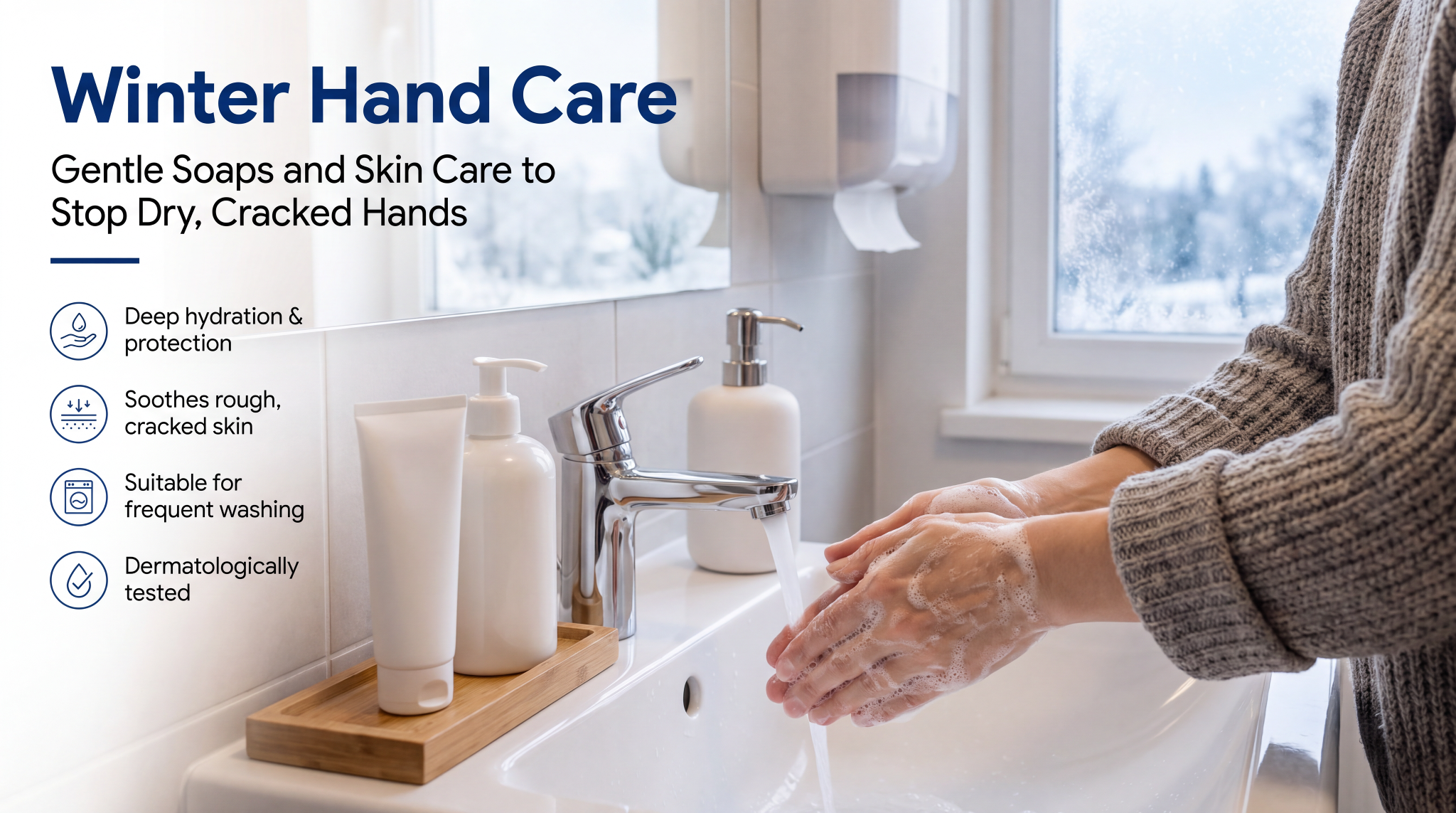
Every winter, the same complaint spreads through staff rooms. Hands that are red, sore and cracked across the knuckles. Cold air, indoor heating and constant handwashing all take their toll, and cleaning staff and teachers feel it more than most. Winter hand care is not a luxury. Cracked skin hurts, it can split and bleed, and it lets germs and irritants in more easily.
This guide explains why hands suffer in winter, which habits make things worse, and how to stock your site so staff can protect their skin. It is written for facilities managers, school business managers and anyone who buys supplies for a team that washes its hands all day.
Why winter is so hard on hands
Skin has a natural oil layer that keeps moisture in and irritants out. Cold, dry winter air strips that layer. Central heating dries the air indoors, so there is little relief when you step inside. Then you add the washing.
Cleaning staff wash their hands many times a shift, often after handling cleaning products. Teachers wash and sanitise their hands between lessons, after break, after first aid incidents and before lunch. Each wash removes a little more of that protective oil. By January, the skin has not had time to recover.
Wet work makes things worse. Hands that stay damp for long periods soften and crack more easily. Gloves help with many jobs, but sweaty hands trapped inside them can become irritated too. The aim is to keep hands clean without stripping them bare.
Why this matters for employers
Sore hands are not just uncomfortable. Skin that is cracked or broken is more vulnerable to infection. It can also develop contact dermatitis, a skin condition that causes redness, itching and soreness, and that can become a long-term problem if it is ignored. Staff who do wet work or handle cleaning products are at higher risk than most.
Employers have a duty to assess and control risks to health from hazardous substances, and that includes risks to the skin. A simple, visible plan for hand care shows you take that duty seriously. It also saves money, because sore and sick staff take time off.
Start with the right soap
The soap you stock makes a real difference. Harsh soaps strip more oil from the skin, so a gentler product is a sensible choice for sites with heavy handwashing. Express carries a range of creams, soaps, gels and sanitisers for workplaces, so you can choose products that suit your site and your staff.
Fragrance is worth thinking about too. Strong scents can irritate sensitive skin, and some people react to them. A mild, simple soap is often the safest option for shared washrooms, where you cannot know who will be using it.
Do not skimp on quality to save a few pence. A soap that dries out hands leads to more complaints, more absence and, in the end, more cost.
Moisturise after washing, not just when it hurts
Hand cream does its best work when you use it often. Applying a cream after washing, and again at the end of the day, helps the skin rebuild its protective layer. Waiting until the hands already hurt means you start from a worse position.
Make it easy for people to do the right thing. Keep a tube or dispenser of hand cream in the staff room, in the washroom and at the reception desk. Staff who find cream within reach will use it. Staff who have to ask or search for it will not.
Choose a cream that absorbs quickly. Teachers and cleaners need to get back to work, and a greasy cream that leaves marks on paper or makes it hard to grip a mop handle will not get used.
Sanitiser and soap: use each in the right place
Hand sanitiser is useful, but alcohol-based gels can dry the skin when used many times a day. Soap and water is the better choice when hands are visibly dirty, and it is the recommended method for some illnesses, including norovirus, where gel does not work as well. Sanitiser suits the moments when you cannot reach a sink, such as between lessons or on the move.
Express stocks sanitisers alongside its soaps and creams. Positioning them sensibly helps, so that staff use sanitiser where it makes sense and wash properly where a sink is available. It also reduces the number of times staff reach for gel out of habit.
Drying matters just as much as washing. Damp hands crack more easily, so staff need to dry thoroughly after each wash, including between the fingers. Soft paper towels are kinder to the skin than rough ones, and a dispenser that works well encourages people to take a second towel when they need it.
Gloves: protection with a caveat
Gloves protect hands from cleaning chemicals and from contact with dirt and bodily fluids. Express lists disposable gloves and aprons within its First Aid and Healthcare range, so you can supply staff with the right protection for the job.
Gloves are not a cure-all, though. Wearing them for hours with damp hands can irritate the skin, so take them off and dry the hands whenever the task allows. Make sure staff put gloves on to clean hands, and always wash and dry hands after removing them. Gloves should fit well, because a pair that is too tight or too loose causes its own problems.
Hand care in the classroom and on the cleaning round
Teachers and cleaning staff face different problems, so a one-size plan rarely works. Teachers wash and sanitise in short bursts through the day, often in a rush between lessons. A small tube of cream in the desk drawer, and a mild soap at the classroom sink, makes it much easier to look after their skin.
Cleaning staff work with water, chemicals and gloves for hours at a time. Plan for that with a proper routine. Wear gloves for wet work and chemical tasks, change them when they become damp inside, and moisturise at breaks and at the end of every shift. Keep the cream in the cleaners' store as well as the staff room, so it is there when the shift ends and the hands are at their worst.
Spot the early signs and act early
Skin problems start small. A patch of redness, a dry, tight feeling or a tiny crack across a knuckle are all early warnings. Staff who ignore them often end up with a much bigger problem by February.
Encourage people to report early signs, and make sure they know who to tell. A manager who responds quickly, perhaps by swapping a soap or offering better gloves, can stop a minor issue turning into time off work. If a staff member's skin does not improve, or becomes painful, they should see their GP or occupational health service.
Set up a hand care station
The simplest way to make all this work is to build a small hand care station in each key area. Put gentle soap, a hand cream and a sanitiser in the staff room and the main washrooms. Add soft paper towels and a bin that is easy to reach. Place a sign that reminds people to moisturise after washing.
Check these stations weekly during the winter months. Supplies run down faster in cold weather, because people wash and moisturise more often. A station that is empty by Wednesday does nothing for the rest of the week.
Plan your winter order early
Demand for soaps, creams and sanitisers climbs from October onwards. Hold a buffer of the fastest-moving items, and review your usage from last winter before you order. If a product caused complaints last year, change it now, before the cold weather sets in.
Ordering in the early part of the season also gives you time to try a new soap or cream with a small group before you roll it out across the whole site.
Frequently Asked Questions
Why do cleaning staff get dry, cracked hands in winter?
Cold air and indoor heating dry the skin, and frequent washing strips away its natural oils. Handling cleaning products and wearing gloves for long periods can add to the problem.
How often should staff use hand cream?
After washing and at the end of the working day is a good rule. Regular use rebuilds the skin's protective layer, while waiting until the skin hurts means starting from a worse position.
Is hand sanitiser bad for dry skin?
Alcohol-based gels can dry the skin when used many times a day. Use soap and water when hands are visibly dirty, and keep sanitiser for moments when you cannot reach a sink.
Do gloves protect against dry hands?
They protect against chemicals and dirt, but long periods in damp gloves can irritate the skin. Take them off when the task allows, and dry hands thoroughly afterwards.
When should a member of staff see a doctor about their hands?
If the skin becomes painful, does not improve with regular care, or shows signs of infection, they should see their GP or occupational health service.