



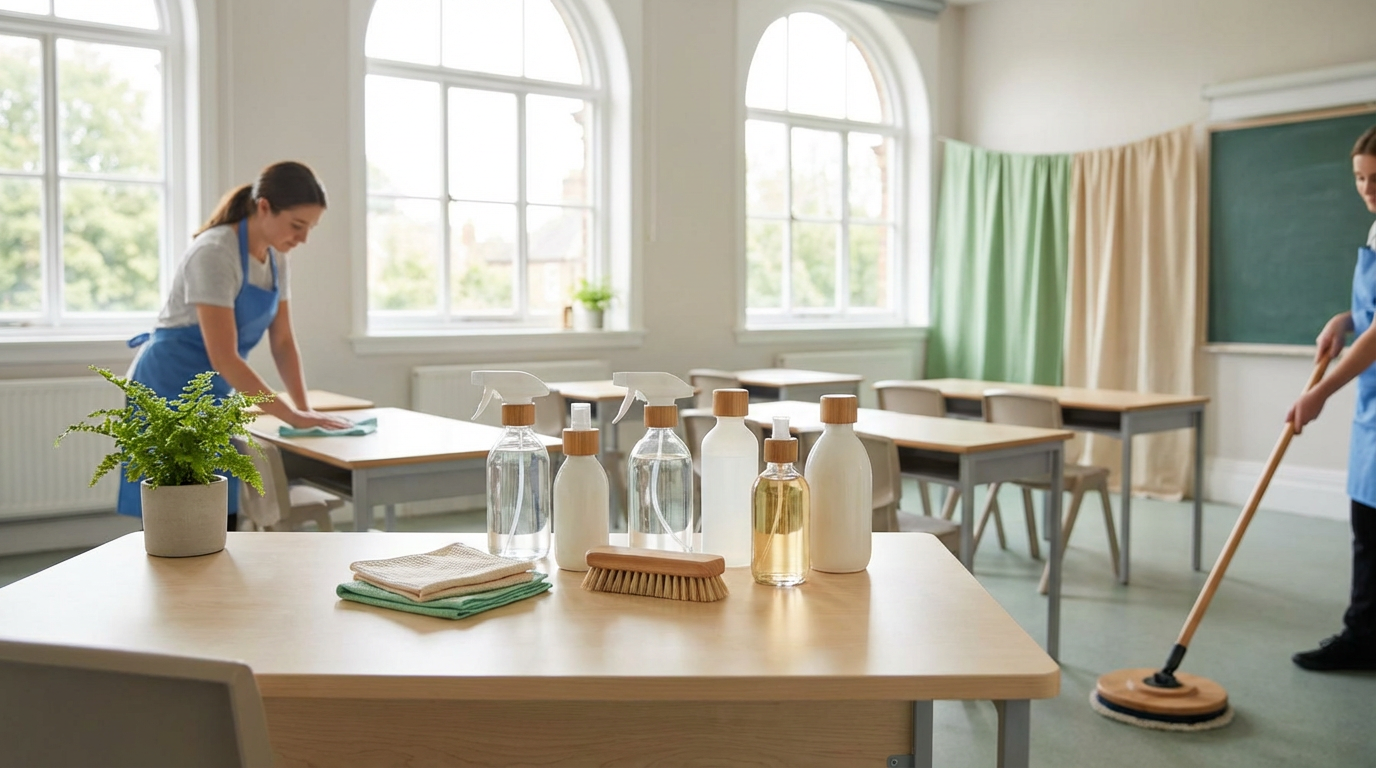
Schools are under pressure to clean more carefully, buy more responsibly and reduce unnecessary chemical exposure without adding avoidable cost or workload. That is not always easy. A school site contains classrooms, washrooms, kitchens, corridors, staff rooms, early years areas and sometimes sports facilities, all with different cleaning demands.
This is where sustainable school cleaning needs to be practical, not symbolic. A greener campus is not created by replacing every product overnight or choosing anything with an eco label. It comes from using the right safer product in the right area, controlling dilution, reducing waste and making daily cleaning easier for site teams to manage.
At Express Cleaning Supplies, we focus on helping schools move towards greener cleaning without compromising hygiene, safety or value. Our Green Range includes eco cleaning chemicals, recycled equipment, recycled paper, eco sacks, Q-Eco Tabs and low-waste systems designed for professional environments, including education settings.
What green cleaning for schools really means
Green cleaning for schools is not just about using a gentler surface spray. It covers the full cleaning system: chemicals, paper products, cloths, mop systems, waste sacks, dispensers, dosing, training and storage.
In practice, the goal is to reduce unnecessary exposure to harsh chemicals while still cleaning effectively. That matters in schools because children and young people spend long periods indoors, and cleaning often happens around occupied or soon-to-be-occupied rooms.
However, “eco-friendly” should never be treated as a shortcut for risk assessment. HSE guidance on COSHH still applies. Cleaning products should be stored safely, used with good working techniques, handled with suitable PPE where needed, and used in well-ventilated areas.
Therefore, the best approach is controlled substitution. Replace higher-impact products where a safer alternative will perform properly. Keep specialist products where they are genuinely needed. Train staff so they understand dilution, contact time, storage and which product belongs in which area.
Why safer cleaning products matter in education
Schools are not sterile environments, and they should not be treated like them. The priority is sensible hygiene, clean surfaces, safe washrooms and a comfortable indoor environment.
UK health protection guidance for education settings focuses on practical infection prevention, including hand hygiene, cleaning and ventilation. That means green cleaning must still support everyday hygiene control, especially around toilets, kitchens, dining spaces and high-touch surfaces.
The real benefit of safe cleaning products for schools is balance. Low-odour, biodegradable and correctly diluted products can reduce unnecessary chemical burden for cleaners, pupils and staff. At the same time, professional formulations still need to remove soil, grease, body fats, limescale and residues that allow dirt and odours to build.
In other words, green does not mean weak. It means choosing products that do the job with less waste, fewer harsh ingredients where possible and clearer control over use.
Start with the areas pupils use most
Classrooms, desks and shared surfaces
Classrooms need products that can handle daily marks, fingerprints and general grime without leaving strong chemical smells behind. Desks, tables, door plates, plastic chairs and laminated furniture often need frequent attention, so product choice affects both cleaning quality and indoor comfort.
For general wipeable surfaces, Eco-Logik Multi-Surface Cleaner is a useful school option because it is suitable for hard surfaces including laminated furniture, stainless steel, ceramic tiles, anti-slip floors and other washable surfaces. It can be used by trigger spray or with recognised mopping systems, which gives site teams flexibility across classrooms and shared spaces.
For schools trying to cut packaging and stockroom clutter, Q-Eco Tabs offer a different model. A pack of ten tabs makes ten 750ml trigger bottles, and the range includes SaniTab, WashTab, GreaseTab and GlassTab options. When diluted, the tabs are classified as non-hazardous, although staff should still follow label instructions and store them dry.
Washrooms need green products that still work hard
Washrooms are often where green cleaning is judged most quickly. If limescale, body fat, odour or splash marks remain, people assume the product has failed. For this reason, schools should avoid using a basic general cleaner for every washroom job.
Greyland Maximum Eco Washroom Cleaner 750ml is designed to clean, disinfect and deodorise in one ready-to-use product. It also helps prevent limescale and body fat build-up, which makes it relevant for school toilets, sinks, tiles, chrome, stainless steel, enamel and similar surfaces.
For larger schools, the 5 litre Maximum Eco Biotech BT4 Washroom Cleaner option can make more sense where teams refill bottles and cover multiple blocks. Meanwhile, Eco-Logik Washroom Cleaner gives schools another Green Range option for toilets, washrooms and wet areas.
The operational point is simple. A sustainable washroom routine needs the right product, the right frequency and the right paper and soap systems. If cleaners use too much product because the routine is unclear, the school loses both the environmental and cost benefit.
Corridors, halls and hard floors
Hard floors are some of the most expensive areas to clean badly. Too much chemical can leave residue. Too much water can create slip risk. Too weak a product can leave soil behind, which dulls the floor and increases complaints.
For daily or periodic floor cleaning, Quattro Q-Eco V-Floor & Surface Cleaner is a concentrated hard floor and multi-surface product suitable for common school floor types including polished floors, lino, PVC, concrete, tiles, laminate, wood and marble. It also offers broad hygiene performance for germs, bacteria and enveloped viruses.
Similarly, Prochem Natural Multi Surface Cleaner 5L provides a biodegradable, phosphate-free and VOC-compliant option for floor and hard surface cleaning. It has a mild pH and is designed for tough oily and greasy soils, which can be useful in high-traffic areas where dirt is tracked through corridors and entrances.
In practice, schools should match floor chemicals to both the surface and the cleaning method. A product used with a scrubber dryer may need different dilution and foaming behaviour from one used with a mop system.
Dining halls, kitchens and food areas
School kitchens and dining halls need a slightly different approach. Grease, food residues and spillages require stronger cleaning action, but products still need to be safe for the environment they are used in.
For catering spaces, Greyland Maximum Eco 3-Way Cleaner, Degreaser & Revitaliser is designed for heavily soiled kitchen surfaces, ovens, grills, cooker hoods and food preparation areas. It is non-caustic, surface safe and not classified as hazardous, which makes it a more considered choice for professional kitchen cleaning than relying on harsher products by default.
For hygiene-critical areas, Greyland Maximum Eco Super Concentrate SC2 Food Safe Cleaner & Sanitiser is another relevant option. It is odourless and non-tainting, cuts through grease and dried-on food residues, and sanitises at the same time. That makes it suitable for school kitchens, food preparation areas and catering operations.
As a result, catering teams can reduce unnecessary chemical complexity while still keeping food areas properly controlled.
Odour, stains and organic soiling
Not every school cleaning problem is solved by fragrance. Changing rooms, washrooms, early years spaces, carpets, upholstery and waste areas can hold organic odours if the source is not broken down properly.
Greyland Maximum Eco Biotech BT7 Odour & Stain Digester is designed to break down organic soiling and odours at source. It can be used on carpets, upholstery, fabrics, flooring, urinals, walkways, sinks, baths, showers and kitchen waste areas. It is also described as non-harmful and septic-tank compatible, with eco-conscious packaging that includes 51% recycled polymer containers.
For schools, this kind of product is especially useful where odour complaints repeat even after routine cleaning. Rather than masking the smell, a biotech product helps tackle the organic residue creating the problem.
Recycled equipment and consumables matter too
Green cleaning is not only about chemicals. If a school switches to sustainable products but still uses disposable-heavy systems and poor stock control, the impact remains limited.
Express Cleaning Supplies’ Recycled Equipment range includes recycled mop buckets, wringer systems, cloths, wipes, spray bottles, bins, janitorial accessories and safety equipment. The range is designed to reduce resource use while still performing in commercial settings, including schools.
Paper products can also support a greener campus. For example, North Shore 1Ply White Recycled Z-Fold Hand Towels x3000 are made from 100% recycled paper and designed for one-sheet dispensing, which helps reduce waste in busy washrooms. Similarly, Lucart EcoNatural jumbo toilet rolls use recycled fibres and suit high-traffic school washrooms where fewer roll changes save caretaker time.
In addition, eco sacks and recycled liners can support waste and recycling routines across classrooms, dining halls and playground areas.
How to introduce sustainable cleaning without disrupting the site team
A full switch in one order sounds efficient, but it often creates confusion. Schools get better results by phasing the change.
Step 1. Audit what you already use
List surface sprays, washroom cleaners, floor chemicals, degreasers, paper products, bin liners and mop systems. Then identify duplicate products or items that staff rarely use correctly.
Step 2. Replace the highest-volume products first
Start where usage is highest: classroom sprays, washroom cleaners, floor cleaners, hand towels and toilet tissue. Small improvements in these categories usually create the biggest waste and cost impact.
Step 3. Standardise by area
Use one classroom surface system, one washroom system, one hard-floor system and one catering system where possible. This reduces training time and makes ordering easier.
Step 4. Train cleaners properly
Even safer products can be wasted or misused. Staff should understand dilution, dwell time, PPE, ventilation and storage.
Step 5. Review after one term
Track complaints, stock usage, refill frequency, odour issues and cleaning time. If a product performs well, standardise it. If it fails in one area, check whether the issue is product choice, dilution, frequency or method.
Practical checklist for a greener school cleaning cupboard
Use this checklist before placing your next order:
- Choose low-odour products for classrooms and enclosed areas.
- Use concentrated or tablet systems where storage and refilling are well managed.
- Keep food-safe products separate from general cleaners.
- Match washroom products to limescale, odour and body fat build-up.
- Use recycled hand towels and high-capacity toilet tissue where traffic is heavy.
- Keep Safety Data Sheets accessible for staff.
- Store all cleaning products securely and away from pupils.
- Train cleaners on dilution, PPE and ventilation.
- Use colour-coded cloths and equipment to reduce cross-contamination risk.
- Review usage termly so bulk buying reflects real demand.
Common mistakes to avoid
The first mistake is assuming that every eco product suits every job. A classroom surface cleaner is not a kitchen degreaser, and a mild daily washroom cleaner may not be enough for neglected limescale.
The second mistake is buying “non-toxic cleaning products for schools” without checking how they are used. Non-toxic does not mean no controls. Schools still need labels, storage, PPE where required and COSHH awareness.
The third mistake is judging green cleaning by fragrance. A strong smell does not prove cleanliness. In fact, low-odour products are often more suitable for occupied education spaces, especially where younger pupils or sensitive users may be present.
FAQs
What is sustainable school cleaning?
Sustainable school cleaning means using products and systems that reduce waste, lower unnecessary chemical exposure and still maintain proper hygiene. It includes chemicals, paper products, equipment, dosing, training and stock control.
Are green cleaning products suitable for schools?
Yes, when chosen correctly. Products such as Eco-Logik, Maximum Eco, Q-Eco Tabs and recycled paper systems are relevant to school cleaning because they support lower-impact cleaning without removing the need for proper hygiene routines.
Are non-toxic cleaning products for schools completely risk-free?
No. Safer products still need correct handling, storage and use. Schools should follow product labels, COSHH requirements and manufacturer guidance.
Which areas should schools switch first?
Start with high-use areas such as classrooms, washrooms, dining halls and corridors. These spaces use the most products and usually offer the biggest opportunity to reduce waste and chemical exposure.
Do eco cleaning products cost more?
Some may cost more per bottle, but concentrated products, tablet systems and correct dispensing can reduce waste and improve cost per clean. For this reason, schools should compare usage, not just unit price.
How can Express Cleaning Supplies help schools go greener?
We offer a dedicated Green Range, recycled equipment, recycled paper products, eco sacks, Q-Eco Tabs and professional cleaning chemicals for different school areas. More importantly, we help schools match products to real site needs, so sustainability supports the cleaning routine rather than complicating it.