



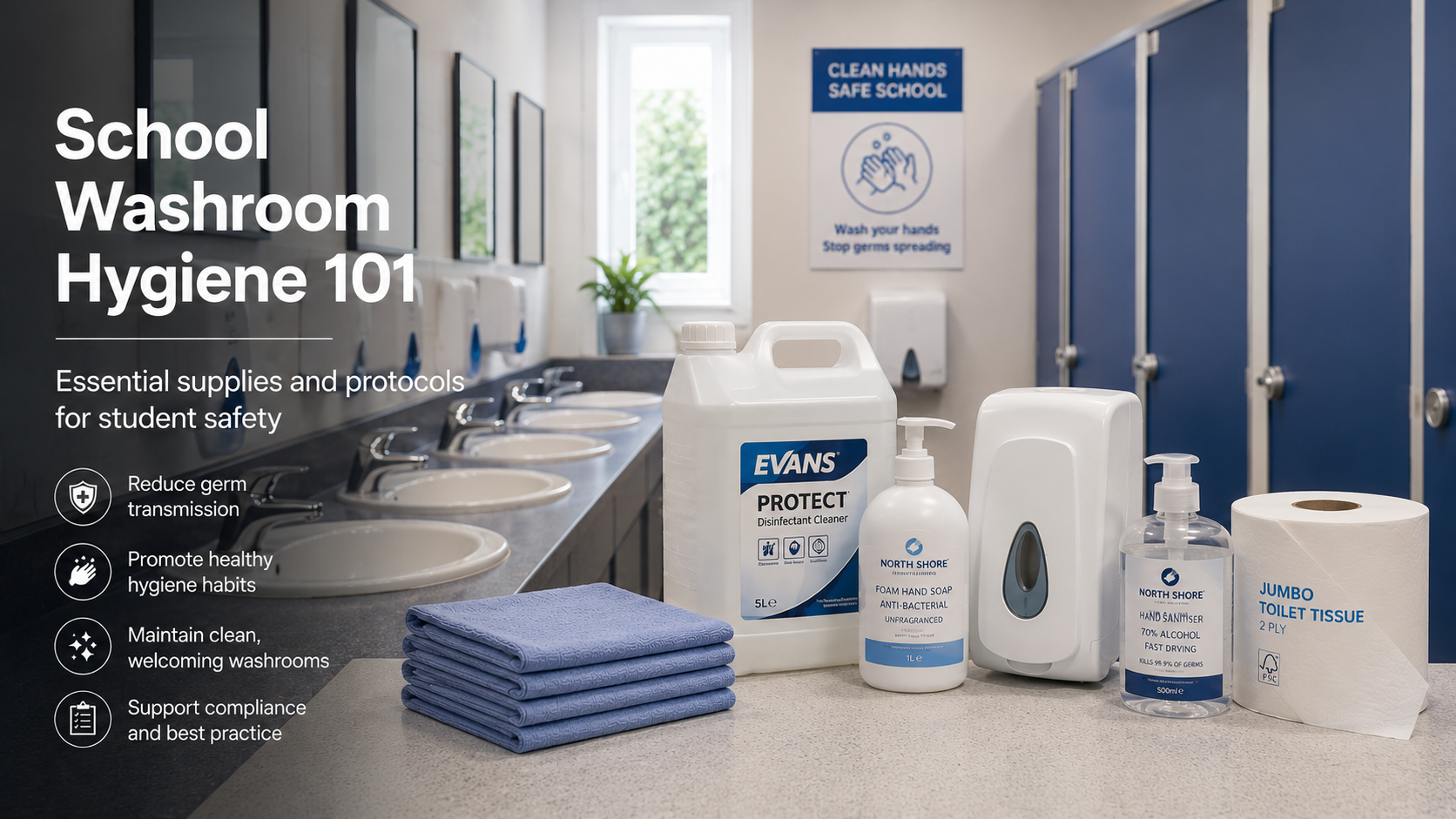
A school washroom can shape how pupils, parents and staff judge the wider site. If soap runs out by lunchtime, hand towels overflow, or odours remain after cleaning, people notice quickly. More importantly, weak washroom routines can allow germs, moisture, waste and slip risks to move through the building.
At Express Cleaning Supplies, we see school washroom hygiene as a practical system, not a one-product fix. The right approach combines suitable cleaning chemicals, hand soaps, sanitisers, paper supplies, dispensers, waste disposal and clear cleaning protocols that staff can follow during a busy school day.
Why school washroom hygiene needs a proper system
School washrooms are different from office toilets. They are used in short, intense bursts around breaktime, lunch, PE lessons and after school clubs. As a result, supplies run down quickly and small issues can become visible within minutes.
For this reason, school washroom hygiene should focus on three things: cleanliness, availability and safety. A washroom may be cleaned well at 7am, but if it has no soap by 11am, the system has failed.
HSE workplace welfare guidance states that toilets and washing facilities should provide soap and a way to dry hands, such as paper towels or a hand dryer. UK health protection guidance for education settings also highlights hand hygiene, cleaning routines and safe handling of bodily fluid spillages as part of infection control.
Essential school washroom supplies
The strongest washroom routines usually start with a controlled core list. Too many product types create training and storage issues, but too few leave cleaners improvising.
A practical school washroom supply list includes:
- Hand soap and compatible dispensers
- Hand sanitiser for supporting hygiene points
- Toilet tissue and hand towels or hand dryers
- Disinfectant cleaner for high-touch surfaces
- Toilet cleaner, descaler and washroom cleaner
- Colour-coded cloths, mops and buckets
- Gloves, aprons and appropriate PPE
- Sanitary disposal products
- Urinal screens or odour control products where needed
- Wet floor signs and hygiene monitor boards
Our Washroom range brings many of these areas together, including cleaning chemicals, disinfectants, paper consumables, dispensers, toilet cleaners, air fresheners, toilet brushes, colour-coded cleaning tools and signage.
Hand hygiene, soap and sanitiser
Hand hygiene sits at the centre of student safety. If soap dispensers are empty, difficult to use or poorly positioned, pupils are less likely to wash their hands properly.
For busy pupil washrooms, cartridge soap systems and bulk refill soaps usually make more sense than loose pump bottles. They help cleaners monitor stock more easily, reduce bottle clutter and make refilling faster across multiple washrooms.
Our Soap and Skin Care range includes liquid soaps, foam soaps, antibacterial soaps, cartridge refills, bulk refills, sanitisers and dispensers for schools and other professional settings. Products such as North Shore Unfragranced Anti-Bac Foam Soap 6 x 1 litre, SC Johnson Deb Oxybac Foam Wash and Cleenol Senses Fragrance-Free Antibacterial Hand Wash give schools options for different washroom needs.
Sanitiser is useful in reception areas, dining halls, corridors and temporary hygiene points. However, it should support washroom hand hygiene rather than replace soap and water.
Toilet cleaning, descaling and disinfection
Toilets and urinals need more than a general surface spray. Limescale, urine deposits, body fats and odour sources build up in ways that standard cleaning will not always remove.
For routine toilet care, schools can consider products such as THRIVE Toilet Cleaner Powder, which is listed as an eco-friendly probiotic descaler for limescale and odour control. For tougher descaling, ProJanta Looscale and Diversey Shield Limescale Remover are designed for washroom descaling tasks, with the correct handling, dilution and safety controls followed.
High-touch surfaces need a different approach. Door plates, flush handles, taps, cubicle locks and dispenser buttons should be cleaned with suitable disinfectant cleaners and allowed the correct contact time.
Evans Protect Disinfectant Cleaner 5L is a concentrated multi-purpose disinfectant cleaner listed as suitable for schools, with performance standards including EN 1276 and EN 14476 at the recommended dilution and contact time. Evans Final Touch Anti-Bac Washroom Cleaner is another washroom option, designed to clean, disinfect and deodorise in one operation.
Paper products and hand drying
Hand drying affects both hygiene and washroom flow. If pupils queue too long, or paper runs out, the system breaks down.
Paper towels work well in many school washrooms because they are quick, simple and easy to check. Z-fold towels are particularly useful because they dispense one sheet at a time, which helps reduce waste and unnecessary handling. Our Z-fold hand towel range includes recycled and pure pulp options, with compatible dispensers available for busy sites.
For example, North Shore recycled Z-fold hand towels are a practical option for pupil washrooms where controlled dispensing and bulk supply matter. In staff or visitor washrooms, a softer 2-ply option may make sense where presentation carries more weight.
Hand dryers can also be suitable in some schools. Our Washroom range includes automatic hand dryers, and the Capital Gladiator Hand Dryer is described as suitable for schools and restaurants. The choice between paper towels and dryers should consider noise, energy use, queueing, wall space and how easily the area can be maintained.
Odour control, urinals and sanitary disposal
A clean washroom should not rely on fragrance to hide poor cleaning. However, odour control still has a role, especially in urinal areas, changing rooms and older toilet blocks.
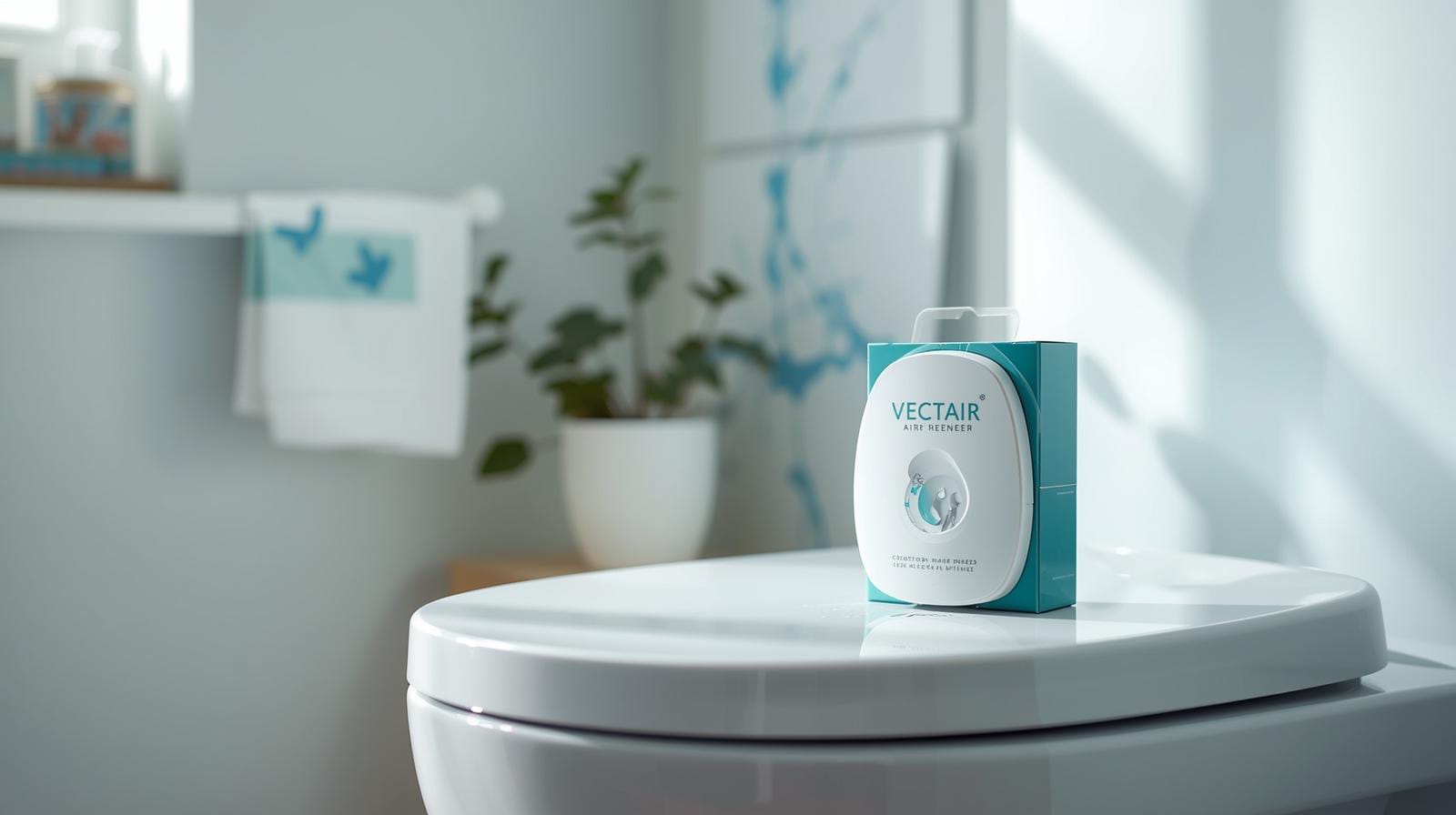
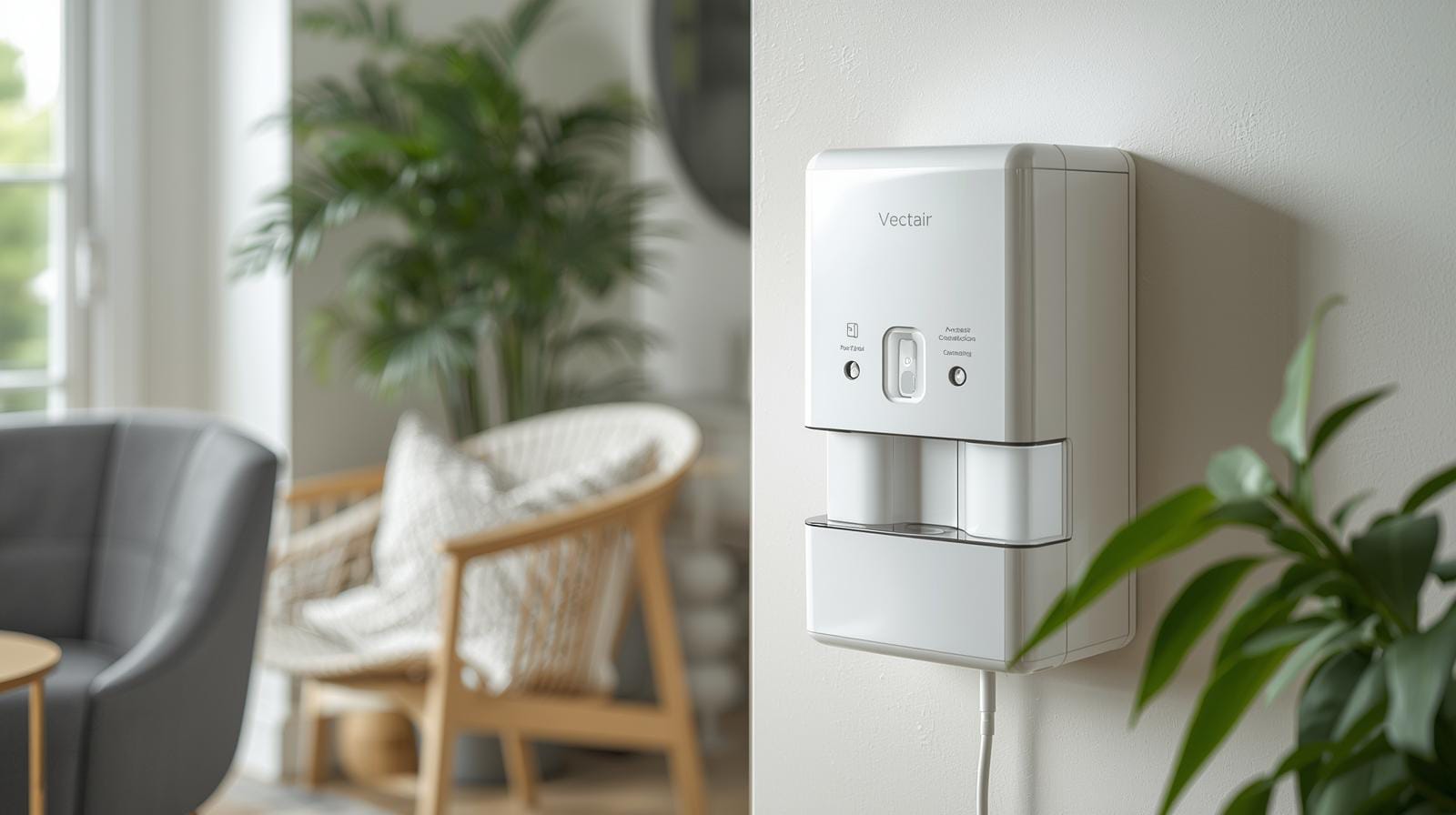
Urinal screens can help reduce splashback, blockages and odour between cleaning visits. We stock Vectair systems including P-Screen, V-Screen Halo and related urinal freshener products. The Vectair P-Screen is listed as a 60 day triple action deodorising screen, while the V-Screen Halo supports splashback protection and fragrance release.
Sanitary disposal also needs proper provision. Our Feminine Hygiene and Sanitary Bins ranges include sanitary disposal bins, sanitary bags, refills and dispensers for schools, offices and public facilities. These products support discreet disposal, reduce odour risk and prevent cleaners from having to manage unsuitable waste routes.
In secondary schools, staff washrooms and visitor areas, sanitary disposal should sit inside the washroom plan from the start. It should never be treated as an afterthought.
Cleaning protocols by frequency
A good school washroom protocol should be simple enough for daily use and clear enough for inspection. The best routines separate daytime checks from end-of-day cleaning and deeper periodic work.
During the school day
Daytime checks should focus on availability and visible safety. Refill soap, paper towels and toilet tissue. Remove obvious waste. Check floors for water, spillages or paper build-up.
In addition, check that cubicles are usable, bins are not overflowing and wet floor signs are used only where there is a genuine temporary hazard.
End-of-day cleaning
The main clean should cover toilets, urinals, sinks, taps, dispensers, door handles, push plates, cubicle locks, flush points, nearby wall areas and floors.
Cleaners should work from cleaner areas to dirtier areas. In practice, that means keeping washroom tools separate from classroom or catering tools and changing cloths or mop heads before moving between zones.
Weekly or termly deep cleaning
Deeper cleaning should address limescale, grout lines, drains, vents, behind sanitary bins, under sinks and high-level dust. School holidays are also a good time to review broken dispensers, damaged toilet seats, poor ventilation and recurring odour problems.
COSHH, PPE and cross-contamination control
The safest washroom system is controlled, not aggressive. More chemical does not automatically mean better cleaning, and mixing products can create real hazards.
HSE COSHH guidance for cleaning tasks highlights safe storage, good working techniques, suitable PPE where needed and ventilation. Schools should keep Safety Data Sheets accessible, train staff on dilution and contact times, and store chemicals securely away from pupils.
Colour coding also helps. Red cloths and mop systems are commonly used for washrooms, while other colours are reserved for classrooms, catering or general areas. Our washroom category includes colour-coded mops, buckets, cloths and related cleaning accessories to support that separation.
Slip risk needs attention too. Washroom floors often become wet through cleaning, leaks or handwashing. HSE guidance advises choosing cleaning methods that do not introduce additional slip risks and restricting access while smooth floors are wet or damp.
Stock control and bulk buying for schools
Running out of soap or toilet tissue is usually a planning issue, not a product issue. Schools should track usage by washroom block, rather than relying only on whole-site ordering.
Large schools and multi-site trusts often benefit from standardising around a few core formats. One soap cartridge, one hand towel system, one toilet roll system and one main washroom cleaner can make training, storage and reordering much easier.
Bulk buying can reduce disruption, but only if storage is secure and stock rotates properly. At Express Cleaning Supplies, we support schools with broad product choice, bulk ordering, local authority purchase orders and practical advice on choosing compatible dispensers, chemicals and paper systems.
Practical school washroom hygiene checklist
Use this checklist before reviewing supplies or placing your next order:
- Map every pupil, staff and visitor washroom.
- Check soap, toilet tissue and hand drying capacity by footfall.
- Match paper towels and toilet rolls to compatible dispensers.
- Keep high-touch disinfectant cleaners separate from descalers.
- Use toilet cleaners and descalers only as directed.
- Provide sanitary disposal in relevant cubicles.
- Use colour-coded cloths, mops and buckets for washrooms.
- Keep PPE and Safety Data Sheets accessible.
- Schedule checks around breaktime and lunch peaks.
- Record recurring issues such as odour, leaks or empty dispensers.
- Review stock monthly during term time.
FAQs
What are the most important school washroom supplies?
Soap, toilet tissue, hand drying, disinfectant cleaner, toilet cleaner, sanitary disposal and colour-coded cleaning tools should come first. Odour control, hygiene monitors and specialist descalers can then be added where the site needs them.
How often should school toilets be checked?
Busy pupil toilets should be checked during the day, especially after break and lunch. The full clean usually happens at the end of the day, with deeper cleaning scheduled weekly, monthly or during school holidays.
Should schools use hand soap or hand sanitiser?
Both can be useful, but soap and water should remain the main washroom hand hygiene method. Sanitiser is best used as a support product where handwashing facilities are not immediately available.
What disinfectants are suitable for school washrooms?
Schools should choose professional disinfectant cleaners suitable for hard washable surfaces and follow dilution and contact time instructions. Products tested to standards such as EN 1276 and EN 14476 can be useful where higher hygiene control is required.
How can schools reduce washroom odours?
Start by cleaning the source, not masking it. Descale toilets and urinals, check drains, empty bins, improve ventilation and use urinal screens or aircare products where they support, rather than replace, cleaning.
How can Express Cleaning Supplies help?
We help schools build practical washroom systems around real usage. That includes chemicals, hand soaps, sanitisers, paper products, dispensers, sanitary disposal, urinal care, colour-coded tools, PPE and bulk ordering support. Done well, school washroom hygiene becomes easier to manage, easier to audit and far more reliable for pupils and staff.