



Schools do not clean like offices, and they do not buy like offices either. A primary school may need quick-response floorcare for toilets and corridors, while a secondary campus may need equipment that can cover sports halls, dining spaces and long circulation routes without slowing the site team down. The wrong machine costs twice. You pay for it once, then you pay again in labour, downtime and poor results.
At Express Cleaning Supplies, we see one mistake more than any other. Schools buy on headline price, then discover the machine does not suit the building, the shift pattern or the operator. The best cleaning equipment for schools is the equipment that matches floor type, traffic, storage space and the reality of term-time cleaning windows.
What schools actually need from their cleaning equipment
School cleaning puts pressure on both people and machinery. Corridors peak at fixed times, dining areas get heavily soiled in short bursts, washrooms need fast turnaround, and classrooms often need quiet cleaning. Therefore, school maintenance equipment has to balance productivity with flexibility.
We always start with four questions. How much floor area needs daily machine cleaning. How many operators will use the equipment. Where will it be stored and charged? How quickly does the space need to be safe and ready again? HSE guidance is clear that cleaning helps control slips, but the process itself can introduce wet floors, trailing cables and trip hazards if methods and equipment are poorly chosen. COSHH guidance also requires schools to control exposure to cleaning substances, store them safely, provide suitable PPE where needed and keep work areas ventilated.
The core cleaning equipment every school should consider
For most schools, the shortlist is disciplined:
- A scrubber dryer for large hard floors
- A HEPA vacuum for classrooms, offices and libraries
- A backpack or cordless vacuum for stairs and tight access
- A wet and dry vacuum for spill response and maintenance jobs
- A microfibre mop system with colour-coded buckets and wringers
- A janitorial trolley for daily rounds and waste handling
- A carpet extraction machine for periodic deep cleaning
- Floor safety signs for wet work and restricted access
These are the cleaning tools for school janitors that save the most labour over time.
Floor scrubber dryers for corridors, halls and dining areas
If a school still relies on mopping alone for large hard floors, that is usually the first bottleneck to fix. Mops still have a place, but they are slow on long corridors and often leave a damp surface behind. HSE specifically warns that even a well-wrung mop can leave enough water on a smooth floor to create a slip risk, and that smooth floors should be left dry or kept out of use until dry.
That is where scrubber dryers earn their keep. The i-mop range we supply is designed to bridge the gap between manual mopping and traditional scrubber dryers, using twin counter-rotating brushes and vacuum recovery so floors are left clean and dry within seconds. For smaller and mid-sized routes, the Viper AS380B offers up to 750m² per hour and 68 dB(A) operation. For larger campuses, ride-on units such as the Viper AS710R can cover up to 4,413m² per hour, which makes a real difference in sports halls, large atriums and long circulation routes.
HEPA vacuums and backpack vacs for classrooms and stairs
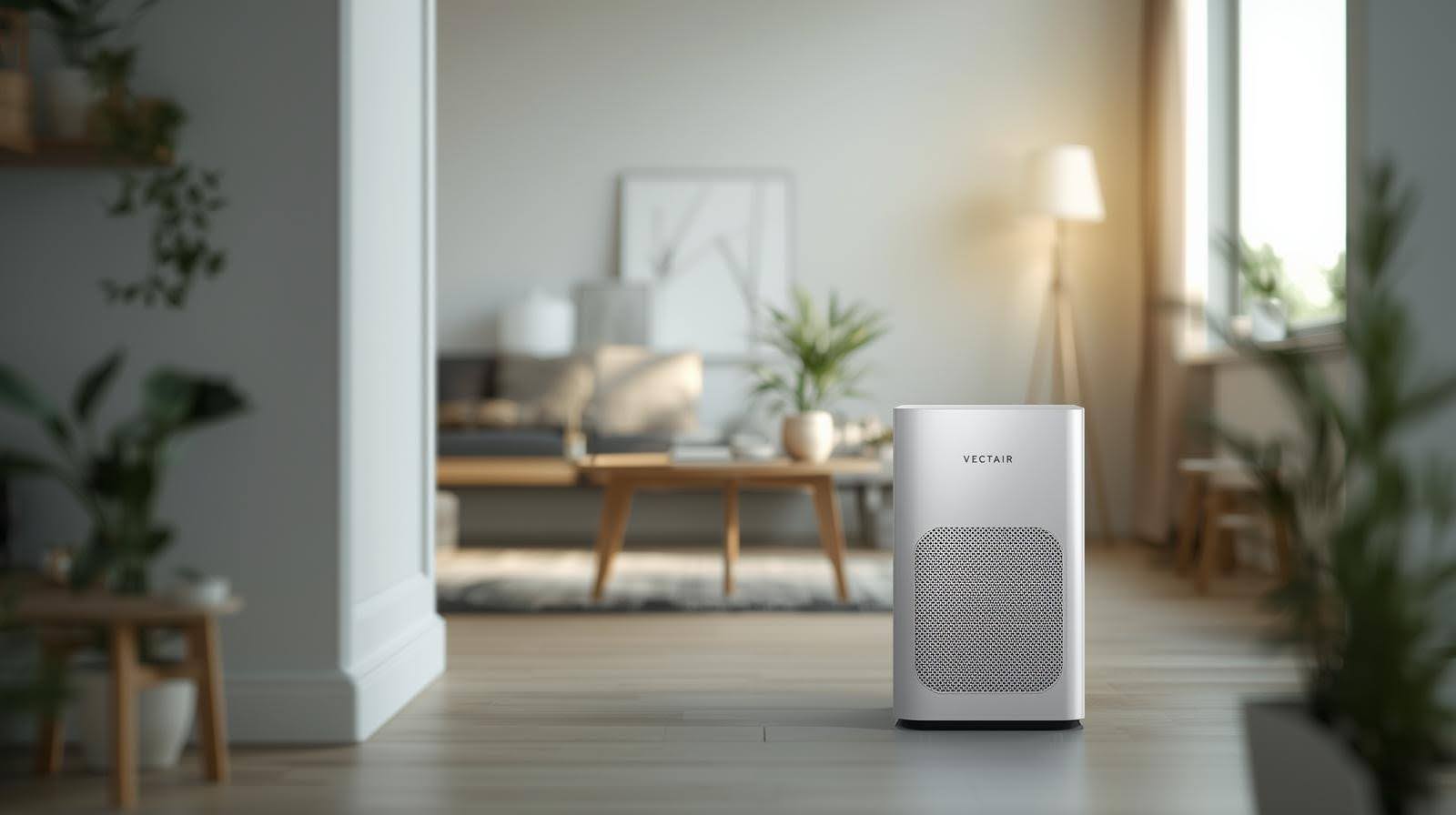
Vacuuming is still the backbone of routine school cleaning. However, in a school setting, low noise, good filtration and easy bag changes usually matter more than headline wattage. Our professional vacuum range includes HEPA and microfilter options because schools often need to control fine dust and daily debris without pushing it back into the room.
For example, the Truvox VTVE HEPA tub vacuum combines a 10 litre tank, 232m² per hour working rate, HEPA 13 filtration and a 6kg body. The Nilfisk VP400 HEPA adds around 56 dB(A) sound pressure, a 15 metre cable and simple filter access, which suits libraries, offices and exam spaces. Where mobility matters more than tank size, backpack vacuums are often the better answer. Our Pacvac Velo uses an 18 metre cord and is quoted for over 1,158m² of cleaning coverage, while the Numatic RSB150NX cordless backpack offers up to 80 minutes of runtime for stairs, stage areas and densely furnished classrooms.
Wet and dry vacuums for reactive maintenance
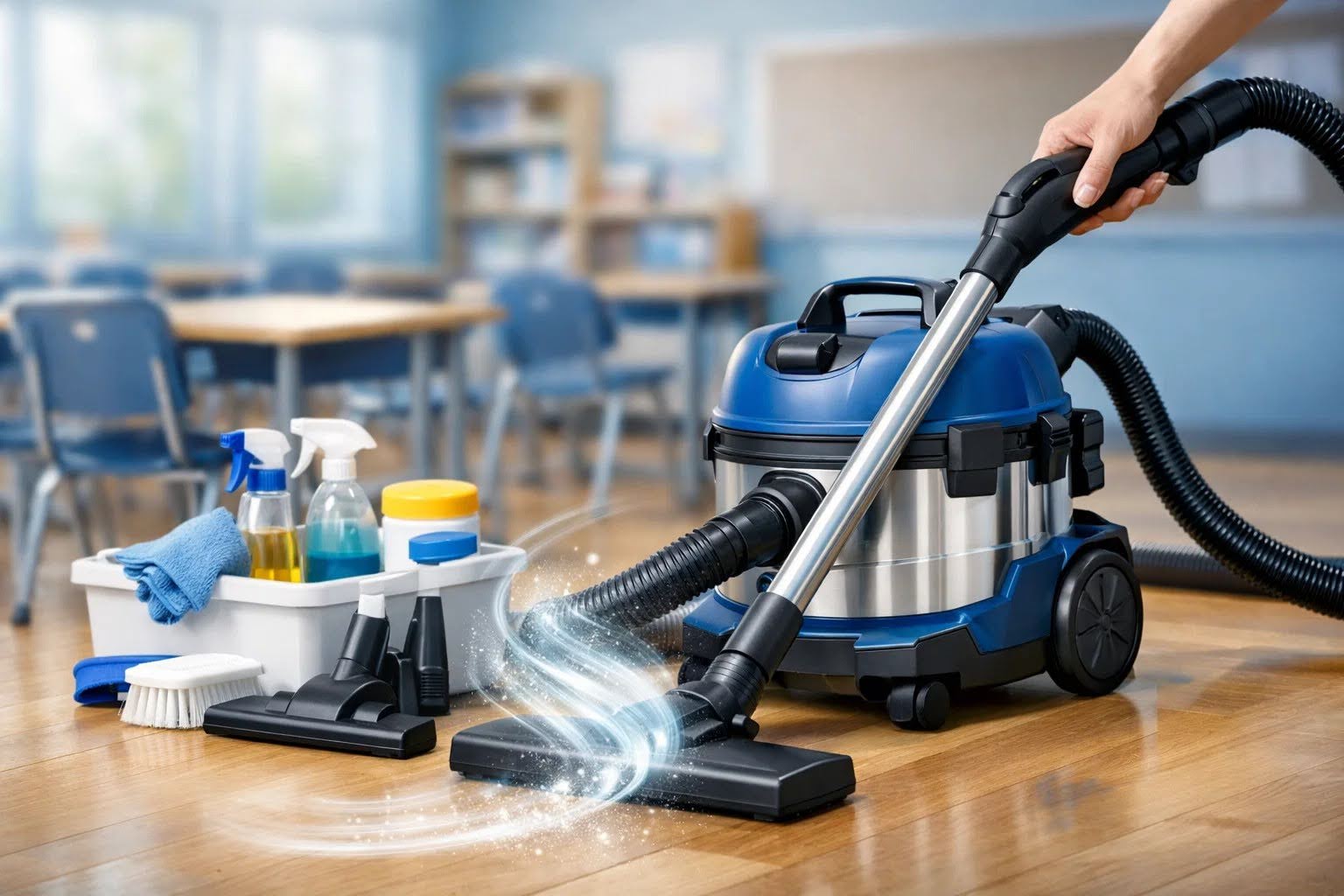
Every school needs one machine that can deal with spills, overflows, tracked-in rainwater and the maintenance jobs a regular vacuum should never touch. Wet and dry vacuums are therefore part of sensible maintenance cleaning equipment for schools, not an optional extra.
In our range, Viper wet and dry vacuums are built with impact-resistant bodies, easy-drain hoses, large wheels and quiet operation for demanding commercial environments including schools. The LSU155 is a straightforward professional wet and dry machine for everyday response work, while larger models such as the LSU275 bring 75 litres of capacity for heavier-duty jobs.
Mop systems, buckets and wringers still matter
Similarly, good mop systems still handle washrooms, stairs, edges, quick spills and the places machines simply do not fit. We stock flat mop kits and microfibre systems because they reduce water use, improve dirt pickup and support faster turnaround on smooth floors.
Our buckets and wringers range includes double bucket trolleys that separate clean and dirty water, plus colour-coded options that support hygiene control. Products such as the SYR Kentucky TC20-R recycled mop bucket and wringer give schools a durable 20 litre mopping combo with colour-coded components, while our Numatic flat mop systems are designed for professional settings including schools.
Janitorial trolleys make daily rounds more efficient
A janitorial trolley controls the round. It keeps waste, cloths, liners, mop heads and bottles in one place, and it cuts waste walking back to cupboards.
Compact trolleys suit daytime cleaners and smaller schools. Meanwhile, larger estates often need a more structured system. Our Numatic ECO-Matic EM1-TM combines open storage with mop buckets and a 120 litre waste facility, while the Numatic SM4 Servo-Matic offers a 240 litre waste system and construction that uses 77% recycled plastic. We also keep trolley accessories and spare parts available because worn castors, broken bag frames and missing wringers are a common but avoidable cause of downtime.
Carpet extraction and safety signs
Not every school has large carpeted areas, but most have some. Libraries, reception spaces, offices, staff rooms and early years areas all tend to include carpets or upholstery that routine vacuuming cannot fully reset. Our Express Solutions Portable Pro is built as a compact injection-extraction machine with enhanced suction, faster drying and quiet operation, and our broader carpet-cleaner range includes portable and upright machines with quick-drying performance for commercial spaces that need to be back in use quickly.
At the same time, safe cleaning systems matter as much as the machine itself. HSE says warning signs help, but they do not replace the need to restrict access, clean in sections and reduce drying time. That is why we treat wet floor signs, cones and simple doorway barriers as essential kit, not an afterthought. Our floorcare range includes standard wet floor signs, foldable hazard signs and doorway bars such as the Robert Scott hanging closed-for-cleaning sign.
How to choose the right equipment for your school
Start with the building, not the catalogue. A one-form entry primary school rarely needs the same machine mix as a secondary school with sports facilities, a sixth form block and external lettings. Therefore, selection should follow the site.
We usually advise schools to buy by task and area type. Corridors, dining halls and sports halls need high-productivity floorcare. Classrooms and offices need low-noise HEPA vacuums. Stairs and cluttered rooms need backpack or cordless vacuums. Washrooms need mop systems, warning signs and robust restocking routines. Caretaking teams need wet and dry vacuums for reactive jobs. Larger schools need janitorial trolleys that reduce walking and standardise rounds.
Think beyond the machine body too. Bags, filters, pads, brushes, hoses, cables and compatible detergents all affect running cost and uptime. That is why schools often standardise equipment fleets by building type or cleaning zone. It simplifies training, reordering and spare-part stocking, and it works better with public-sector purchasing processes. Express accepts local authority purchase orders, and we support quote-based buying as well as straightforward online ordering.
Common buying mistakes schools make
The first mistake is buying domestic-grade equipment for commercial workloads. It may look cheaper at the point of purchase. However, it usually fails sooner, cleans slower and frustrates staff almost immediately.
The second mistake is sizing by ambition rather than access. A ride-on scrubber dryer can look impressive, but it is no use if it cannot get through the doors, around dining furniture or into the storage space. Similarly, a classroom tub vacuum will never replace a wet and dry vacuum for flood response or maintenance clear-ups.
The third mistake is ignoring operator experience. Good cleaning equipment for schools should be easy to train, easy to empty, easy to maintain and forgiving under daily use. HSE makes the same point from a safety angle. Cleaning equipment only works properly if it is well maintained and operators have the right information, instruction and training.
FAQs
What is the most important cleaning equipment for schools?
If you have large hard floor areas, start with a scrubber dryer. If your school is mostly carpeted classrooms and offices, start with a low-noise HEPA vacuum. Most schools then add a wet and dry vacuum, a mop system and a janitorial trolley.
Are HEPA vacuums worth it in schools?
Yes, especially in classrooms, libraries and admin areas where fine dust builds up. Our HEPA and microfilter models are designed to capture fine particles while staying practical for daily use.
Should schools still use mops if they have a scrubber dryer?
Yes. Scrubber dryers reduce labour on large hard floors, but mops still handle stairs, washrooms, edges and quick spill response. In practice, good schools use both.
Do schools need a wet and dry vacuum?
Yes, because spills, leaks and maintenance mess happen. A wet and dry vacuum protects your routine machines and gives caretakers a faster way to deal with liquid and mixed debris.
How often should school cleaning equipment be maintained?
Follow the manufacturer's guidance, but do not wait for failure. HSE notes that cleaning equipment is only effective if it is well maintained, so filters, cables, pads, bags, squeegees and castors all need planned checks.