



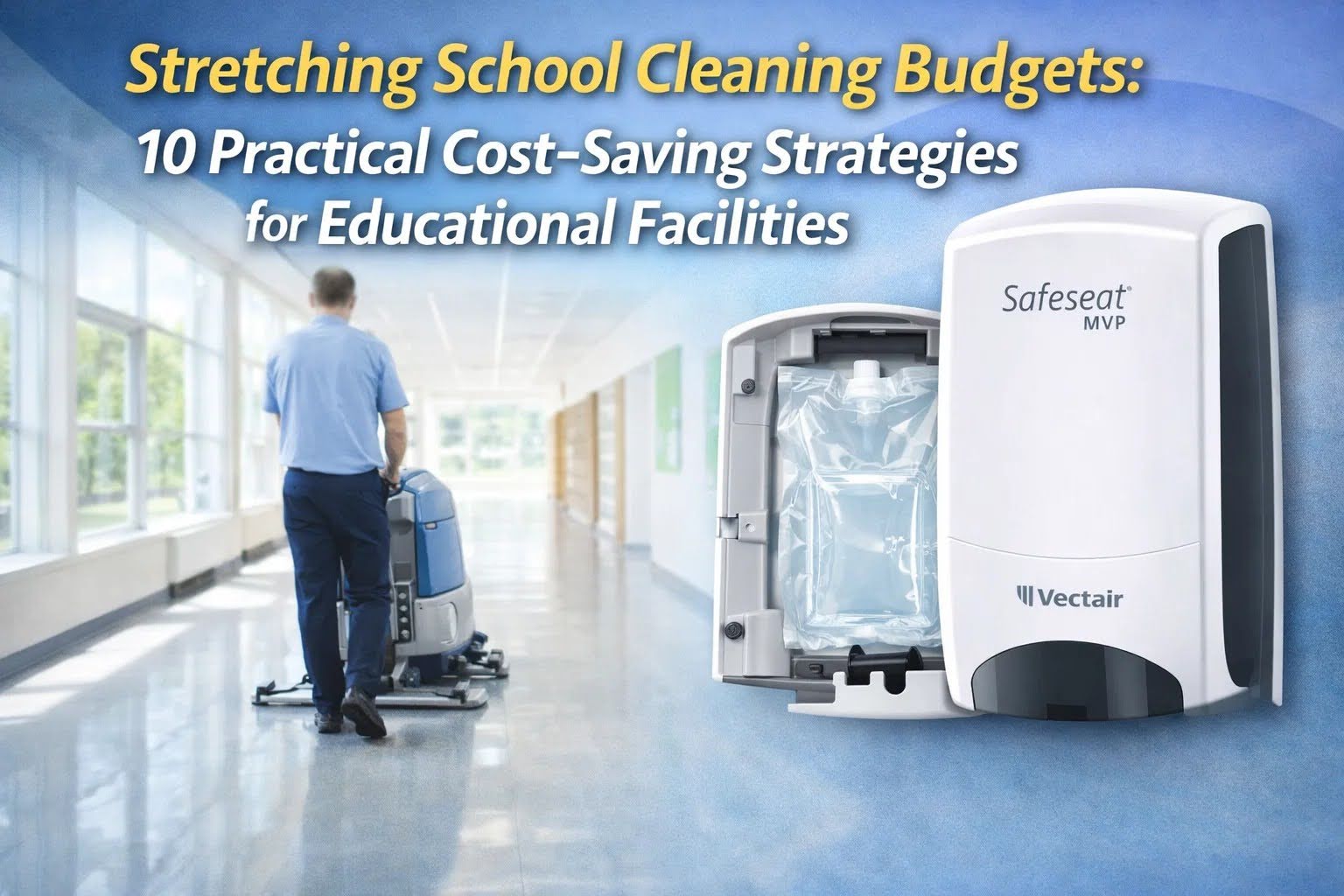
Managing a school cleaning budget is rarely straightforward. Facilities teams are expected to maintain high standards of hygiene, safety and presentation, often within increasingly tight financial constraints. From daily classroom upkeep to periodic deep cleaning of washrooms and communal areas, costs can escalate quickly if processes are not carefully managed.
However, reducing spending does not mean lowering standards. With the right approach, schools can maintain excellent cleanliness while improving efficiency and controlling costs. The key lies in making informed decisions around products, processes, equipment and training.
Below, we outline ten practical and proven strategies that help educational facilities stretch their cleaning budgets without compromising on quality.
- Maximise Value with Concentrated Cleaning Products
Switching to concentrated cleaning chemicals is one of the most effective ways to reduce ongoing costs. Concentrates are designed to be diluted with water, meaning a single container can produce a significantly larger volume of usable solution compared to ready-to-use alternatives.
This reduces cost per litre, minimises storage requirements and cuts down on packaging waste. Over time, the savings become substantial, particularly in high-use environments such as schools.
To fully benefit, staff must be trained on correct dilution ratios. Overuse not only wastes product but can also affect cleaning performance. Using dosing systems or clearly labelled mixing instructions ensures consistency and prevents unnecessary spend.
In addition, concentrated products reduce transportation costs due to lighter loads and fewer deliveries, adding another layer of efficiency.
- Reduce Unit Costs by Buying in Bulk
Schools consume large volumes of everyday essentials such as paper towels, toilet tissue, hand soap, bin liners and cleaning fluids. Purchasing these items in bulk can significantly reduce the cost per unit.
While bulk buying requires a higher upfront investment, it leads to long-term savings and reduces the frequency of orders. It also helps avoid emergency purchases, which are often more expensive and less controlled.
Maintaining a well-stocked inventory ensures continuity and protects against supply disruptions. Many suppliers also offer education sector discounts, making bulk purchasing even more cost-effective.
To avoid waste, it is important to store products correctly and monitor expiry dates, particularly for chemicals.
- Transition to Reusable Cleaning Materials
Replacing disposable cleaning materials with reusable alternatives is a straightforward way to cut costs and improve sustainability.
Microfibre cloths and mop heads, for example, can be washed and reused hundreds of times. Although the initial cost is higher, the long-term savings are considerable compared to continuous purchases of disposable wipes or mop pads.
Reusable materials are also more effective. Microfibre technology captures dirt and bacteria more efficiently, reducing the need for excessive chemical use and repeat cleaning.
Other simple changes include refillable spray bottles and durable protective equipment such as reusable gloves. Over time, these adjustments reduce both purchasing frequency and waste output.
To maintain hygiene standards, it is essential to implement proper laundering procedures for reusable items.
- Improve Efficiency with Effective Stock Management
Poor inventory control can lead to unnecessary spending, either through over-ordering or last-minute purchases. Implementing a structured stock management system ensures that supplies are used efficiently and replenished at the right time.
A simple tracking method, such as a spreadsheet or checklist, allows facilities teams to monitor usage rates and maintain optimal stock levels. Assigning responsibility to a specific team member can further improve consistency.
Adopting a first-in, first-out approach helps prevent products from expiring or becoming unusable. Keeping storage areas organised and clearly labelled reduces duplication and ensures staff can quickly locate what they need.
Additionally, using controlled dispensing systems for chemicals helps prevent overuse and ensures accurate dosing, reducing waste and cost.
- Standardise Cleaning Products and Equipment
Many schools use a wide range of cleaning products for different tasks. While this may seem thorough, it often leads to unnecessary complexity and higher costs.
Standardising products simplifies procurement, reduces training requirements and enables bulk purchasing. For example, using a high-quality multi-surface cleaner for most tasks, alongside a single disinfectant, can replace multiple specialised products.
This approach not only reduces spend but also improves consistency in cleaning outcomes.
The same principle applies to equipment. Standardising machines, such as vacuum cleaners, allows for shared parts, easier maintenance and more efficient staff training.
By streamlining both products and equipment, schools can reduce waste, improve efficiency and maximise value from their budget.
- Prevent Costs with Regular Maintenance
Preventative maintenance is a critical but often overlooked area of cost control. Regular upkeep of facilities and equipment can significantly extend their lifespan and prevent expensive repairs or replacements.
Routine floor care, such as daily dust removal and scheduled deep cleaning, protects surfaces from wear and reduces the need for refurbishment. Similarly, regular attention to washrooms, including descaling and grout cleaning, prevents long-term damage.
Cleaning equipment should also be maintained according to manufacturer guidelines. Tasks such as cleaning filters, checking components and scheduling servicing ensure machines operate efficiently and reliably.
A proactive maintenance strategy reduces downtime, avoids unexpected costs and ensures consistent cleaning performance.
- Optimise Labour Through Smarter Scheduling
Labour is often the largest cost within a school cleaning budget. Improving how cleaning tasks are organised can deliver significant savings without reducing output.
Introducing zone-based cleaning allows staff to focus on specific areas, reducing unnecessary movement and improving accountability. Alternatively, task-based systems can be used, where staff specialise in particular activities such as vacuuming or surface cleaning.
Reviewing cleaning frequencies is also important. High-traffic areas require daily attention, but less frequently used spaces may not. Adjusting schedules based on actual usage prevents unnecessary labour hours.
Encouraging staff, students and teachers to maintain basic cleanliness can further reduce workload, allowing cleaning teams to focus on essential tasks.
Efficient scheduling ensures that time is used effectively, improving productivity and reducing overall labour costs.
- Invest in Time-Saving Equipment
Strategic investment in modern cleaning equipment can lead to long-term cost savings by reducing labour requirements and improving efficiency.
For example, automated floor scrubbers can clean large areas faster and more effectively than traditional methods. High-capacity vacuums and multi-functional machines can further increase productivity.
Although the initial cost may be higher, these tools often deliver a strong return on investment by saving time and reducing manual effort.
When selecting equipment, consider durability, maintenance requirements and overall cost of ownership. Professional-grade machines are typically more reliable and cost-effective over time than lower-quality alternatives.
Energy-efficient models can also reduce utility costs, while quieter machines allow for more flexible cleaning schedules.
- Strengthen Performance Through Staff Training
Well-trained cleaning staff are more efficient, make better use of resources and deliver higher-quality results. Investing in training is therefore a direct investment in cost control.
Training should cover correct product usage, equipment handling, cleaning techniques and health and safety procedures. When staff understand best practices, they avoid common mistakes such as overusing chemicals or missing key steps.
Consistency across the team ensures tasks are completed correctly the first time, reducing the need for rework.
Training also supports staff confidence and job satisfaction, which can reduce turnover and associated recruitment costs.
Regular refresher sessions help reinforce standards and introduce new efficiencies as processes evolve.
- Work with a Knowledgeable Cleaning Supplier
Choosing the right supplier can have a significant impact on both cost and efficiency. A supplier with experience in the education sector can provide valuable guidance, helping schools select the most appropriate products and systems.
Rather than simply supplying goods, a knowledgeable partner can recommend cost-saving alternatives, suggest product consolidation and provide training support.
They may also offer bulk pricing, flexible ordering systems or inventory management solutions, helping schools maintain control over spending.
Working with a trusted supplier reduces the risk of purchasing unsuitable products and ensures consistent quality and availability.
Cost Savings Without Compromising Standards
Reducing cleaning costs in schools is not about cutting corners. It is about working more efficiently, making informed decisions and using resources wisely.
By adopting these ten strategies, schools can achieve meaningful savings while maintaining high standards of hygiene and safety. From smarter purchasing and improved processes to better training and equipment, each step contributes to a more effective cleaning operation.
Ultimately, a well-managed cleaning budget supports a healthier environment for students and staff, while ensuring financial resources are used responsibly.
With careful planning and the right approach, schools can deliver excellent cleaning outcomes without exceeding their budget, creating a sustainable and efficient model for the future.