



Reception is the first point of contact for almost everyone entering a school building, and through autumn and winter it is also one of the first places cold and flu symptoms show up among visitors, parents and staff. Getting the right PPE and virus control supplies in place before the season properly arrives makes reception a line of defence rather than a weak point in a school's wider approach to managing illness through the colder months.
This guide covers what to stock, who needs it, and how to keep reception properly supplied through a season where demand on these items rises sharply compared with the rest of the year.
Why reception needs its own PPE and virus control plan
Reception staff interact with more unfamiliar people in a single day than almost anyone else in a school building, parents dropping off poorly children, visitors signing in, delivery drivers, and students sent to wait there before being collected. That volume of contact, much of it with people outside the school's usual daily routine, makes reception a genuinely different risk environment to a staff room or classroom.
Treating reception as needing a dedicated plan, rather than relying on whatever general supplies happen to be nearby, reflects how much higher the contact load is here compared with most other parts of the building.
PPE essentials for reception staff
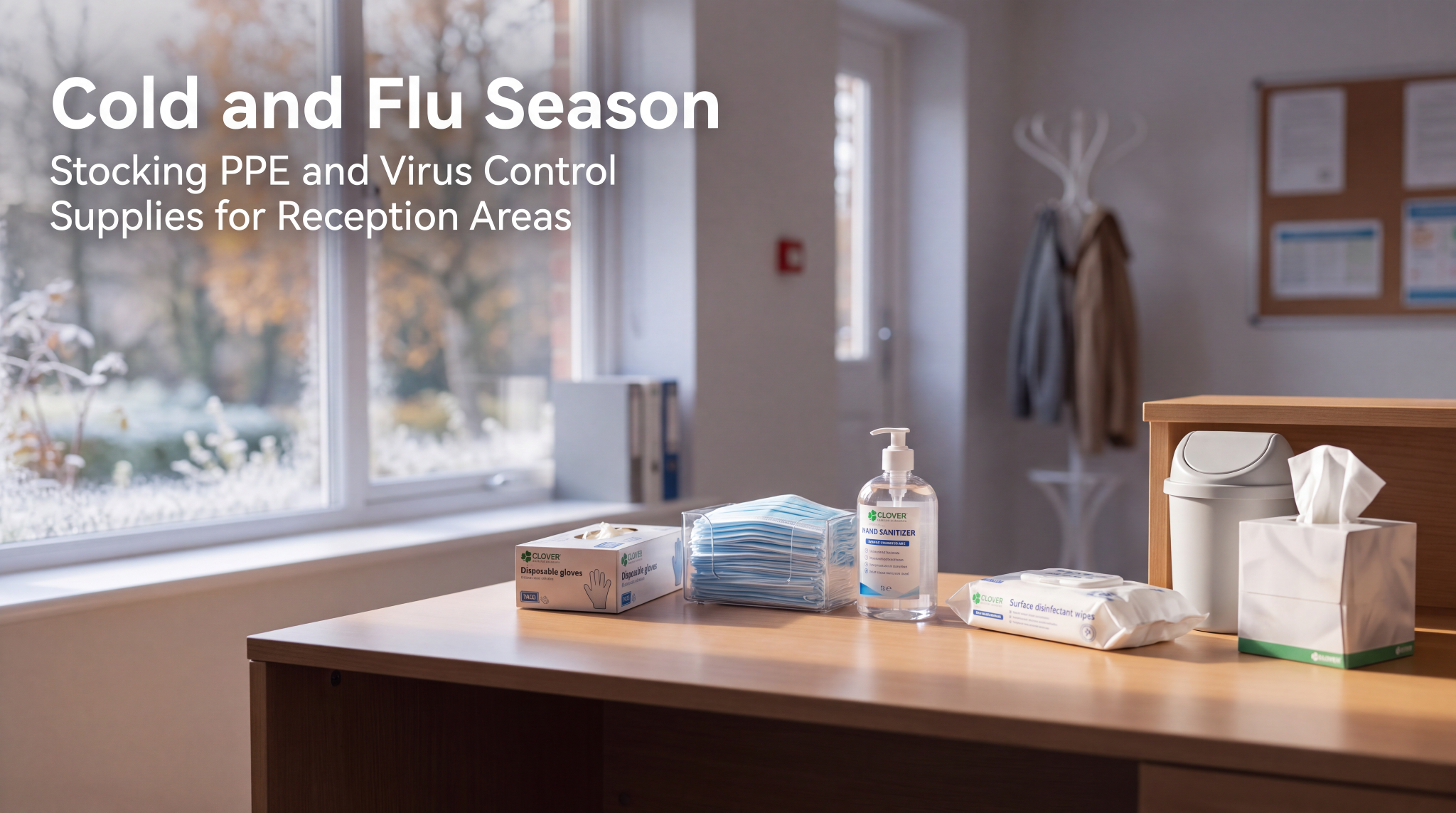
Disposable gloves are the most immediate PPE need for reception staff, particularly when handling items passed over by visitors or supporting a child who is unwell while waiting to be collected. Having gloves readily available at the desk itself, rather than stored elsewhere, means staff can use them as a matter of course rather than only when a situation has already become difficult to manage without them.
Masks are worth keeping on hand too, both for staff who want the option during particularly high-risk periods and to offer to a visibly unwell visitor or parent where appropriate. Respiratory protection does not need to be worn constantly to be useful. Having it available for the specific moments it is needed is what matters.
Aprons and other protective clothing become relevant if reception staff are supporting a child who is unwell while waiting for collection, particularly if there is any risk of being sick. Keeping a small, dedicated supply specifically for this purpose, rather than relying on whatever is available from general cleaning stock, means staff are properly covered without having to search for the right item in the moment.
Virus control supplies that belong at the front desk
Hand sanitiser positioned directly at the reception desk, ideally visible and easy to reach for both staff and visitors, is the simplest and most effective virus control measure available. A dispenser tucked out of sight gets used far less consistently than one placed where it is impossible to miss on the way in.
Surface disinfectant wipes matter just as much at reception as the sanitiser itself, given how many different hands touch the same desk, pen, clipboard or sign-in device throughout a single day. Wiping these high-contact points between uses, particularly after a visibly unwell visitor has signed in, reduces how much gets passed on to the next person using the same surface.
Tissues and a lidded bin, kept together rather than in separate parts of the room, make correct disposal the easy default rather than something staff or visitors have to think about. This small detail matters more than it might seem, since inconvenient disposal options tend to get skipped entirely during a busy morning drop-off period.
Stocking for the actual demand of the season
Reception supplies run down far faster through cold and flu season than during the rest of the year, and ordering the same volume used in a quieter month leaves a real risk of running short exactly when demand is highest. Reviewing how quickly gloves, masks, sanitiser and wipes were used during the previous winter, rather than estimating from a quieter period, gives a far more accurate picture of what the coming season will actually require.
Holding a slightly larger buffer of these fast-moving items through the peak months, rather than running the same reorder pattern used the rest of the year, protects against a single delayed delivery leaving reception without supplies during the exact weeks they matter most.
Training reception staff to use supplies confidently
Having the right supplies in place only helps if staff feel confident using them appropriately. A short briefing at the start of the season, covering what is available, where it is kept and when to use it, helps staff build the habit rather than reaching for PPE only once a situation has already become difficult.
This matters particularly for any temporary or relief staff covering reception during the season, since they will not have the same familiarity with where supplies are kept or what the expected approach is. A brief written reference kept at the desk gives temporary staff something concrete to check without needing to interrupt someone else to ask.
Keeping the approach consistent through the term
A well-stocked reception desk works best as part of a wider seasonal approach rather than an isolated effort. Keeping visibility on stock levels throughout the term, rather than only noticing when something runs out, and reviewing what worked well at the end of the season, builds a better plan for the following year rather than starting from scratch each winter.
Extending the same thinking beyond reception
Reception is the right starting point given how much contact happens there, but the same PPE and virus control approach has value anywhere else in the building that sees a similar pattern of contact with unfamiliar people. A medical room or first aid point, for instance, faces many of the same considerations as reception, unwell visitors, close contact, and a need for readily accessible gloves and sanitiser rather than supplies kept in a general store elsewhere.
It is not necessary to apply the same level of provision across the whole site at once. Getting reception properly stocked and the staff there confident using what is available, then reviewing whether other high-contact points need the same treatment, is a more manageable way to extend the approach than attempting a site-wide rollout in one go.
Budgeting for the season's actual PPE demand
PPE and virus control consumables at reception do not deplete at a steady rate through the year. Usage climbs sharply through the coldest months and drops back down once the season passes, which means a flat, even reorder pattern across the whole year tends to either overstock during quieter periods or run short during the peak.
Tracking actual usage through a first full cold and flu season gives a facilities team a genuinely useful baseline for budgeting the following year, rather than estimating from a quieter month. Holding a dedicated buffer of gloves, masks, sanitiser and wipes specifically for the peak winter weeks, separate from the standard reorder pattern used the rest of the year, is a sensible way to build that seasonal pattern into the budget rather than treating every month as equal.
Signage that reinforces the supplies in place
A short, clear sign near the reception desk supports the supplies already there without needing to do the job entirely on its own. A simple reminder to use hand sanitiser on arrival reinforces what a well-positioned dispenser is already encouraging, and a visible prompt tends to land better with visitors who are not school staff and therefore have no existing habit to rely on.
Positioning and signage work best together rather than as separate measures. A dispenser placed somewhere easy to miss will not be rescued by a sign pointing at it from across the room, so getting the physical placement right first, then reinforcing it with a short, visible prompt, gives both elements the best chance of actually changing behaviour at the desk.
FAQ
What PPE should be kept at a school reception desk during cold and flu season? Disposable gloves, masks and a small supply of aprons for supporting unwell children cover the main needs, kept directly at the desk rather than stored elsewhere.
How much more stock does reception typically need during winter compared with the rest of the year? This varies by site, but usage of gloves, sanitiser and wipes tends to rise noticeably during peak cold and flu months, so reviewing the previous winter's actual usage gives a more accurate reorder figure than an estimate.
Should hand sanitiser be placed at the desk or elsewhere in reception? Directly at the desk, or at the entrance before visitors reach it, works best. A dispenser that is easy to see and reach gets used far more consistently than one tucked out of the way.
Do temporary or relief staff need separate guidance on PPE and virus control supplies? Yes. A short written reference kept at the desk helps temporary staff use supplies confidently without needing to interrupt someone else to ask where things are kept.