



A school can look quiet in the holidays and still be hard to clean well. Corridors need fast turnaround, classrooms need quieter equipment, washrooms need compact machines, and halls can swallow labour if you rely on mop-and-bucket routines for too long. The wrong machine rarely fails on day one. It fails in the timetable, in the storage cupboard, and in the number of staff hours it quietly eats every week.
At Express Cleaning Supplies, we usually see the same issue repeated. Schools buy a machine that sounds impressive on paper, then find it is too large for the route, too noisy for daytime cleaning, too awkward to charge, or too specialist for the people actually using it. Good cleaning machines for schools are not chosen by headline spec alone. They are chosen by building layout, floor type, staffing, access and how quickly an area needs to be safe to re-enter. Our current range also reflects that reality, with a dedicated Cleaning Machines category, a School Essentials section, and purchasing options that include local authority purchase orders and quote-led buying.
The short list most schools actually need
For most sites, the best cleaning equipment for schools is not a huge fleet. It is a small group of machines that each do a specific job well.
- A school floor scrubber for corridors, dining areas, halls and other hard floors
- A HEPA vacuum for schools in classrooms, libraries, offices and shared teaching spaces
- A backpack or cordless vacuum for stairs, rows of seating and cluttered rooms
- A wet and dry vacuum for schools for spill response, leaks and caretaker tasks
- A carpet machine, if you have meaningful carpeted areas and schedule term-break resets
- The right accessories and spares, because bags, pads, brushes and squeegees affect uptime as much as the machine body
That is the core of practical school maintenance equipment. Pressure washers and steam cleaners can be useful as well. However, for most education sites they are second-phase purchases, not the first decision. Express Cleaning Supplies’ Cleaning Machines range covers all of these categories, but schools usually get the strongest return by solving daily floorcare and vacuuming first.
Start with the building, not the brochure
The first question is not, “Which machine is best?” It is, “What are we actually trying to clean, and who is doing it?” A one-form entry primary school has very different needs from a secondary campus with dining halls, sports areas and evening lettings. In practice, the buying decision should start with four checks:
1. Floor type and route length
Hard floor routes favour scrubber dryers, especially where mopping leaves a floor damp and out of use. Carpeted classrooms and admin areas lean towards quiet vacuums. Meanwhile, mixed campuses often need both.
2. Access and storage
A machine can be brilliant and still be wrong. If it does not fit through doorways, around furniture or into the cleaning store, staff will avoid it.
3. Staffing and shift pattern
Some schools clean mainly after hours. Others use daytime cleaners or mixed teams. That changes the balance between mains-powered and battery-powered equipment, and between larger walk-behind machines and lighter, more agile units.
4. Safety and chemical control
HSE guidance for education is clear that slips and trips are a major issue on school sites, and that cleaning regimes can create risk if floors are left wet or routes are blocked. HSE also states that staff need the right information, training and equipment, while COSHH guidance requires safe storage, sensible work techniques, PPE where needed, and good ventilation when using cleaning substances.
Choosing the right school floor scrubber
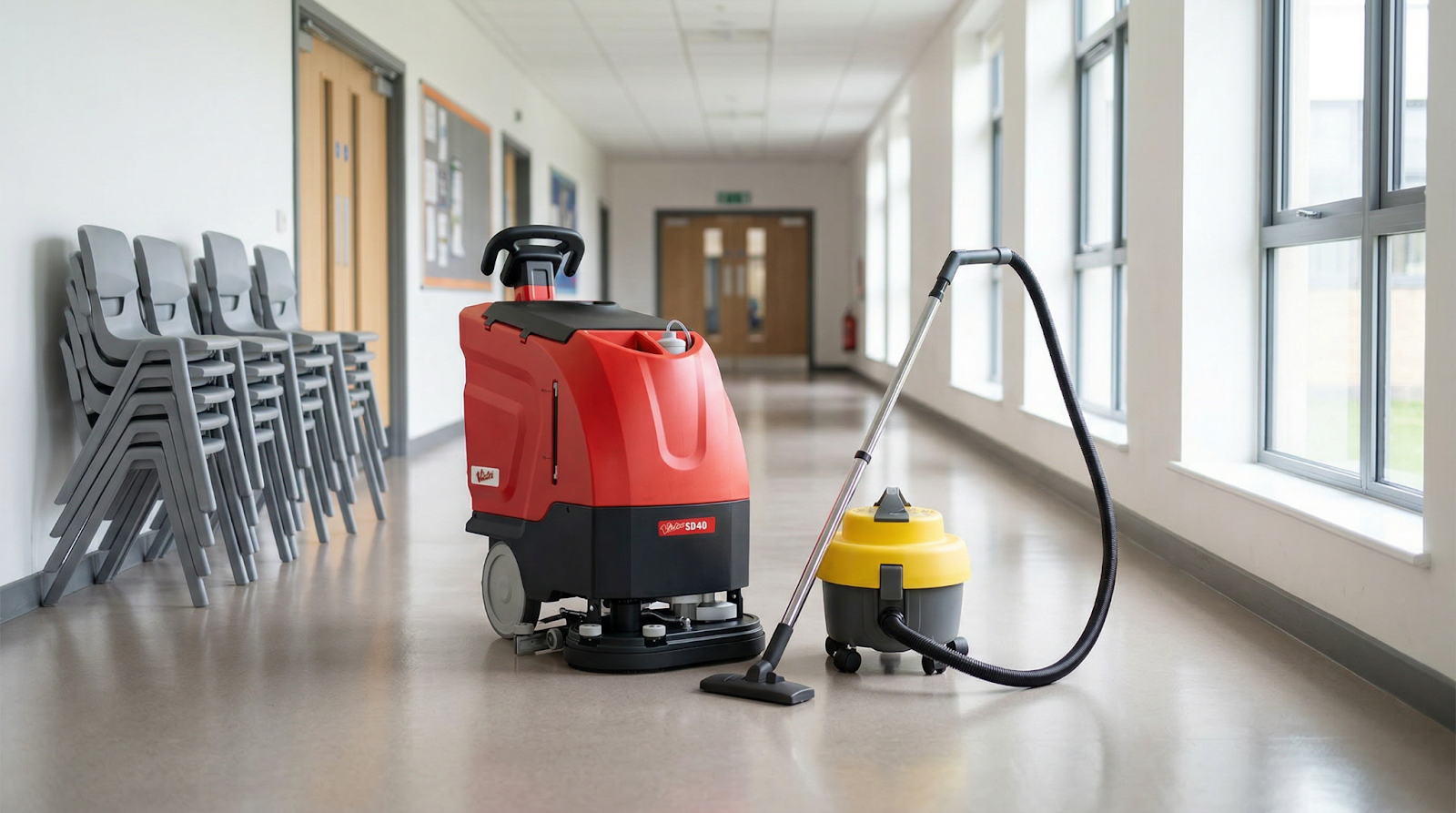
A school floor scrubber is often the first machine that changes labour economics. On longer hard-floor routes, it can reduce cleaning time, improve finish, and cut the amount of standing water left behind compared with traditional mopping. That matters, because HSE notes that smooth floors should be left dry after cleaning or kept out of use until dry.
Compact scrubber dryers for washrooms and tight corridors
If your site has narrow corridors, smaller washrooms, or cramped back-of-house routes, compact is usually better than ambitious. For example, the Viper AS380B is positioned by Express for tight corridors, washrooms and small aisles, and it is supplied with batteries and charger, which suits schools that want a cordless unit ready to deploy. Likewise, the Numatic NCC 220NX is built around tight-space manoeuvrability and one-pass cleaning, so it makes sense where access is awkward and drying time matters.
Battery power often wins in these environments because it removes trailing cables from busy routes. On the other hand, mains-powered compact models still have a place. The Viper AS380C is designed for narrow indoor areas with unlimited mains operation, so it can suit schools that clean in fixed windows and have clear cable control procedures. The choice is less about brand loyalty and more about whether the operator is constantly stopping to plug in, unplug, or work around furniture.
Faster hard-floor options for larger sites
Some schools need more coverage without jumping straight to a full ride-on machine. That is where the i-mop style of machine can be useful. The i-mop Lite is described on the site as bridging the gap between manual mopping and a conventional scrubber dryer in tight spaces, while the i-mop XL range adds a 46 cm cleaning width, twin counter-rotating brushes, battery-powered mobility and quick-drying action. For larger dining routes, long corridors or hall perimeters, that middle ground can be the most practical answer.
We generally advise schools to resist the urge to oversize. A machine that covers more square metres per hour is only a better buy if it can actually work the route. In schools, access usually matters as much as productivity.
How to choose a HEPA vacuum for schools
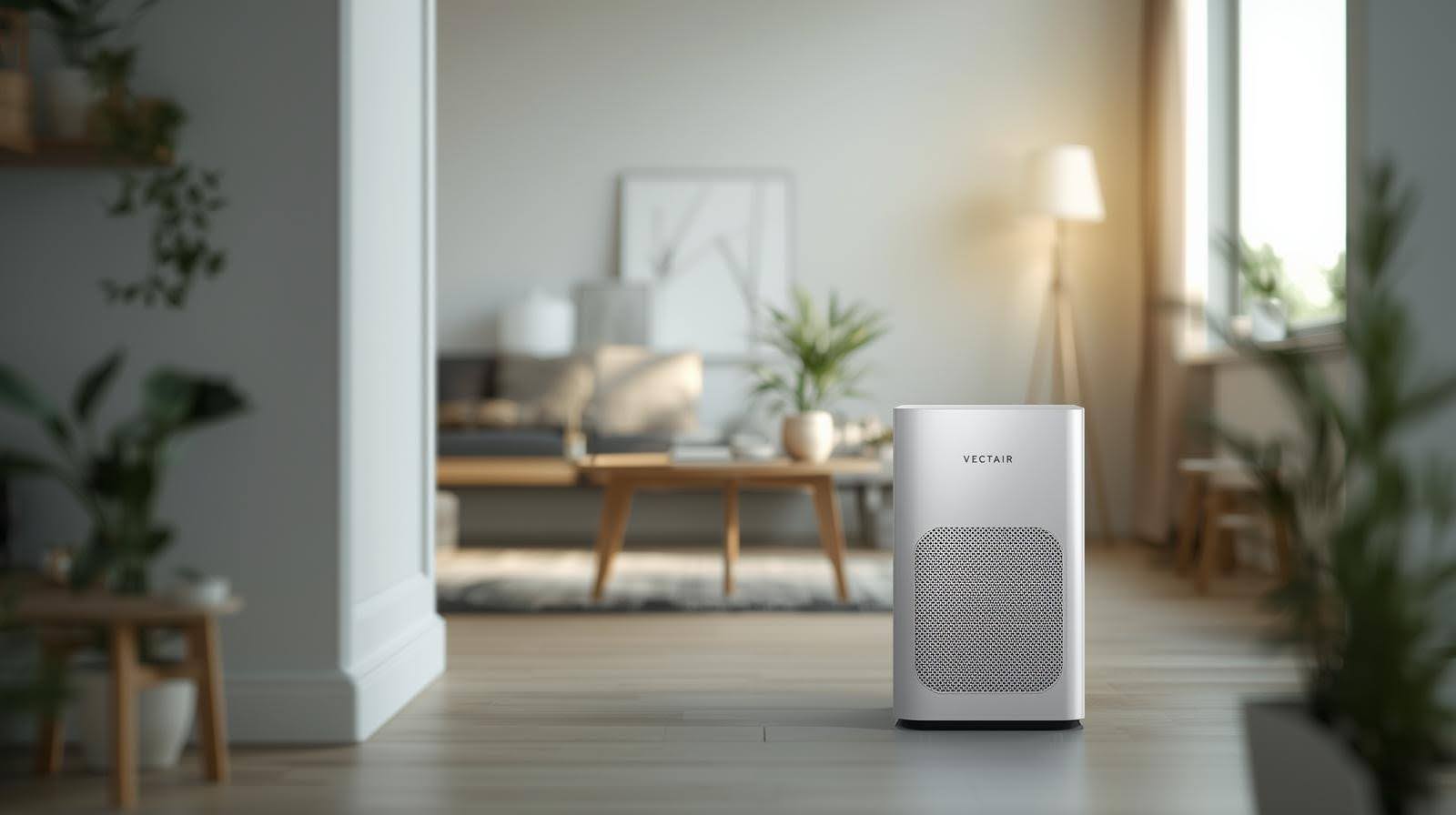
A HEPA vacuum for schools makes sense in classrooms, libraries, offices and teaching spaces where fine dust builds up day after day. Quietness matters too. A noisy machine may be acceptable for an empty hall, but it becomes a problem around revision sessions, lunchtime cleaning or staff offices.
Quiet tub vacs for classrooms and shared rooms
For day-to-day vacuuming, a tub vac is still the backbone of most school cleaning teams. The strongest choices are usually the ones staff can move easily, empty quickly and maintain without fuss. On Express Cleaning Supplies’ site, the Nilfisk VP400 HEPA stands out for HEPA 13 filtration, a 15 metre cable and a compact design aimed at congested spaces. The Truvox VTVe HEPA Tub Vacuum is another strong fit, with a lightweight body, 10 litre capacity and HEPA 13 filtration. Both are practical examples of the kind of quiet, filtration-led vacuum that suits classrooms, admin areas and libraries.
This is also where schools can save themselves frustration by standardising. If every operator uses a different bag type, filter layout or tool kit, simple reordering becomes harder than it should be. A consistent vacuum fleet usually makes training, spares and everyday maintenance easier.
Backpack and cordless vacuums for awkward routes
Meanwhile, some areas punish standard tub vacs. Stairs, lecture-style seating, stage steps, PE storage rooms and densely furnished classrooms are much easier with a backpack unit. The Numatic RSB150NX offers cordless use and up to 80 minutes of runtime, which is useful where cable-free cleaning improves safety and speed. The Pacvac Velo takes a different route, with a lightweight 3.9 kg build, H13 HEPA filtration and a long 18 metre cord, which can work well for teams who want reach without battery management.
As a result, the best vacuum setup for a school is often two-part. Use a quiet tub vacuum as the general machine, then add one backpack vacuum for the awkward routes that waste the most time.
Why every school still needs a wet and dry vacuum
A wet and dry vacuum for schools is rarely the star purchase, but it is often the machine that saves the day. Leaks, blocked drains, tracked-in rainwater, canteen spills and caretaker jobs do not wait for the right weather or the right staffing level.
The point here is not glamour. It is resilience. A standard classroom vacuum is the wrong machine for liquid pickup, mixed debris or maintenance mess. Express stocks machines such as the Viper LSU155 and Viper LSU375, both described as robust wet and dry professional vacuums with strong suction and straightforward operation. For schools, that means spill response can stay with the site team instead of becoming a disruptive workaround.
That also protects your main fleet. If staff start using the wrong vacuum for the wrong task, reliability tends to fall fast.
Do not buy the machine alone
Machine performance depends on more than the motor and tank size. Bags, filters, pads, brushes, squeegees, cables, chargers and compatible detergents all shape uptime and running cost. Therefore, when schools compare cleaning equipment for schools, they should compare the support system as well.
This is one reason we tend to recommend buying by cleaning route rather than by impulse. If your compact scrubber dryer needs a specialist pad, or your HEPA vacuum needs a bag you never keep in stock, the whole process slows down. Express Cleaning Supplies’ live range includes vacuum accessories, vacuum bags, scrubber dryer accessories and cleaning machine spares, which matters for schools trying to keep equipment running across a full academic year instead of buying again after every avoidable failure.
Common mistakes schools make when buying machines
The first mistake is buying domestic-grade equipment for commercial school use. It may look cheaper. However, that saving usually disappears in shorter lifespan, slower productivity and frustrated staff.
The second mistake is buying by square footage alone. A larger machine can clean fast on paper, but that advantage disappears if it cannot turn around tables, reach washroom thresholds or fit the store room.
The third mistake is ignoring the operator. If a machine is awkward to lift, fiddly to empty or irritating to maintain, staff will work around it. In practice, the best school maintenance equipment is the equipment your team will use properly, every day.
The fourth mistake is treating safety as a later conversation. HSE is explicit that cleaning equipment must be well maintained, and that cleaning methods should fit the floor type and reduce rather than create slip risk. That applies just as much to machine choice as it does to chemicals and signage.
FAQs
What cleaning machines do most schools actually need?
Most schools start with one scrubber dryer for hard floors, one HEPA vacuum for classrooms and offices, and one wet and dry vacuum for spill response. Larger or more complex sites then add a backpack vacuum or carpet machine.
Is a scrubber dryer better than mopping in schools?
On large hard floors, yes. A scrubber dryer usually saves time and leaves less moisture behind, which matters for safety and reoccupation. HSE guidance specifically flags wet floors and damp smooth floors as slip risks.
Which school floor scrubber is best for tight spaces?
Compact models tend to work best. The Viper AS380B, Viper AS380C and Numatic NCC 220NX are all positioned for tighter, more congested routes rather than wide-open warehouse-style spaces.
Do schools really need a HEPA vacuum?
In many cases, yes. A HEPA vacuum for schools is particularly useful in classrooms, libraries and admin spaces where fine dust builds up and quieter cleaning matters. Express currently lists several HEPA-focused options, including the Nilfisk VP400 HEPA and Truvox VTVe HEPA.
When does a backpack vacuum make sense?
Backpack vacuums make sense when the route is awkward rather than wide. Stairs, stepped seating, cluttered classrooms and narrow access areas are the obvious examples. Cordless models such as the Numatic RSB150NX suit cable-sensitive spaces, while lightweight corded units like the Pacvac Velo suit longer cleaning runs.
What should schools ask before they buy?
Ask four things. Which areas are being cleaned. Who will operate the machine? Where will it be stored and charged? Which consumables and spare parts will need regular replacement. If those answers are not clear, the buying decision is not ready yet.
At Express Cleaning Supplies, that is how we approach it. Not by pushing the biggest machine in the catalogue, but by matching the right machine to the actual school, the actual route and the actual team using it.