



Laundry is one of those background jobs that only gets noticed when it fails. Towels run short. Cleaning clothes start to smell. Nursery bedding takes longer to turn around. Sports kit comes back stained. In care settings, laundry becomes even more sensitive because hygiene, fabric handling and stock rotation all affect daily operations.
For schools, nurseries, offices, hospitality sites and care environments, commercial laundry supplies should be planned properly. The right mix of detergent, laundry sanitiser, stain remover, fabric conditioner and dosing equipment can reduce emergency buying, improve consistency and help staff manage larger wash loads with less guesswork.
At Express Cleaning Supplies, we supply laundry products for bulk use across professional settings. Our laundry range includes liquid detergent, laundry powder, fabric conditioner, laundry sanitiser, stain removers, alkaline boosters, oxy boosters, laundry bleach, capsules and related products, giving buyers a wide range of formats to suit different sites and washing routines.
Why bulk laundry buying makes sense
Bulk laundry buying is not just about getting more product. It is about reducing disruption. A school or nursery that washes clothes, towels, bedding, aprons or sports kit every week needs predictable stock.
In practice, sites that buy laundry products reactively often end up with too many formats, inconsistent dosing and products that do not suit the fabric type. Meanwhile, a clear core list makes ordering simpler and helps staff use products correctly.
For care settings, laundry also links directly to infection prevention. Government guidance for adult social care says clean and used linen should be kept separate, clean linen should be stored above floor level in a clean, cool, dry place, and stock rotation should use the oldest linen first. It also recommends cleaning schedules for laundry rooms and linen storage areas to reduce cross-contamination and dust build-up.
What schools and nurseries usually need
Schools and nurseries do not usually run laundry in the same way as hotels or care homes, but they still need dependable products.
A practical stock list may include:
- Bulk laundry detergent for towels, cloths and general fabrics
- Laundry sanitiser for higher hygiene requirements
- Stain remover for food, paint, mud and bodily fluid marks
- Fabric conditioner where softness and comfort matter
- Laundry powder for general daily washing
- Laundry liquid for controlled dosing
- Laundry pods or capsules for simpler low-volume washing
- Gloves, aprons and laundry bags where handling risk requires them
For schools, the priority is often sports kit, cleaning cloths, kitchen textiles and occasional bedding. For nurseries, towels, sleep mats, soft furnishings and spare clothing create more frequent washing. In care settings, bedding, towels and resident clothing may require more structured handling.
Choosing laundry detergent by site
Liquid detergent
Liquid detergent is often a good choice for controlled dosing and mixed fabric loads. It can work well in larger sites where staff need consistent results and clear measurements.
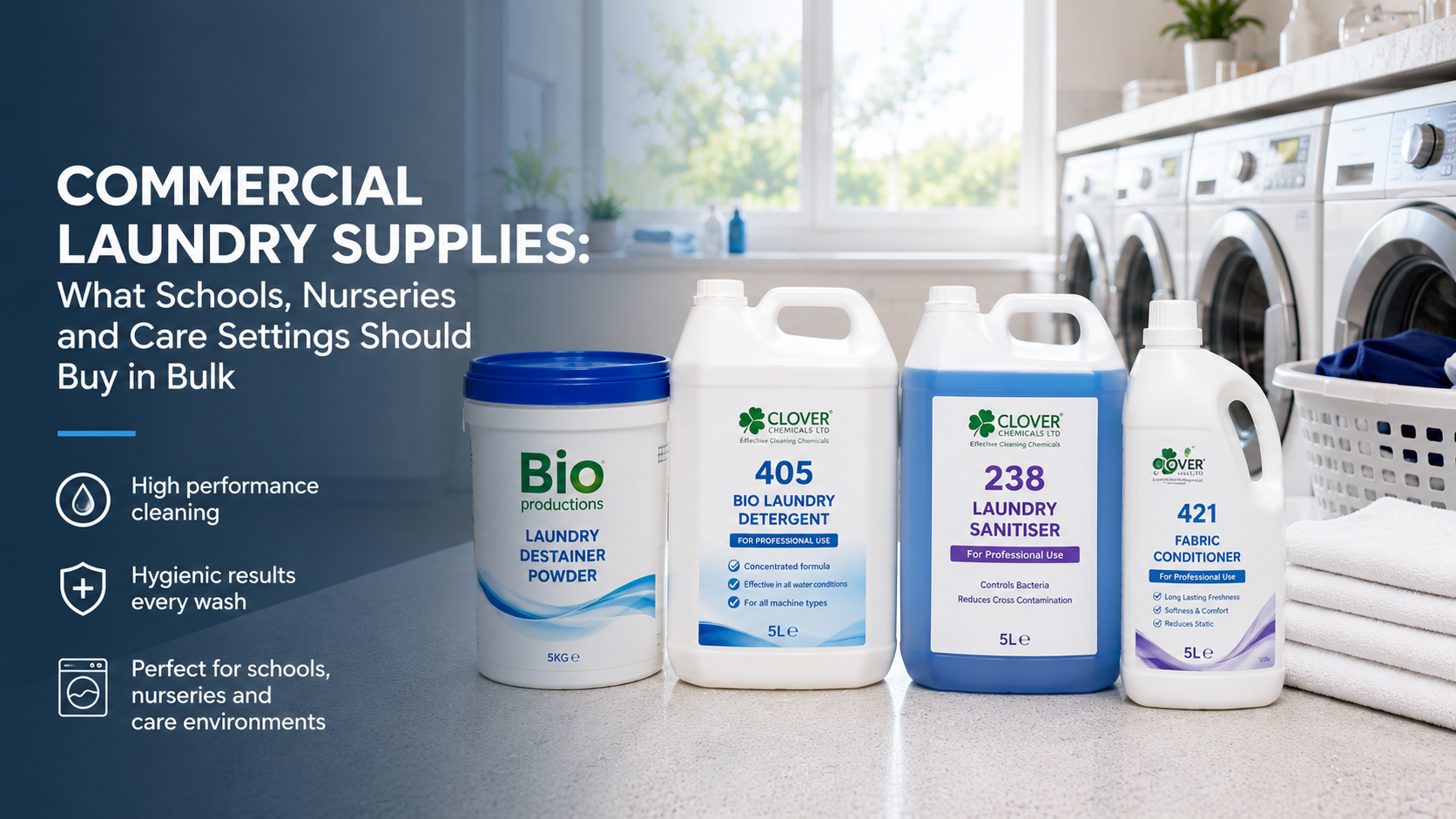
Christeyns Clover 405 Bio Laundry Detergent is listed by Express as a liquid laundry detergent for automatic washing machines, suitable for clothing and linen. The product page describes it as highly concentrated, suitable for hard and soft water areas, and usable through automatic dosing machines or hand washing. It is also described as ideal for large laundries, nursing homes, hospitals and hotels.
This type of product is useful where buyers want one main detergent for repeat laundry workloads.
Laundry powder
Laundry powder remains useful where sites need economical bulk washing. It can be especially practical for schools washing, cleaning cloths, tea towels or general textiles.
Express stocks products such as Bold 2 in 1 Laundry Powder x 130 Wash and Capital Auto Biological Laundry Powder x 10kg, both of which sit within the laundry category.
Powder can be a strong choice when storage is dry, dosing is clear and staff understand which fabrics are suitable.
Pods and capsules
Pods can be useful where staff need simplicity, especially in smaller school offices or nurseries without a large laundry operation. However, they should be stored securely and kept away from children and vulnerable users.
Express lists Ariel by P&G Professional 3 in 1 Laundry Liquid Pods x 50, which may suit lower-volume, controlled laundry use where simple dosing matters.
Laundry sanitiser for higher hygiene requirements
Standard washing may be enough for many routine fabrics, but some settings need additional hygiene control. Nurseries, care settings and sites handling soiled textiles need a clearer process.
Christeyns Clover 238 Laundry Sanitiser is a specialist laundry sanitiser additive stocked by Express. The product page states that it is designed to control bacteria levels during the washing process, reduce cross-contamination through laundered fabrics and support environments where frequent or large quantities of laundry are required in potentially infectious areas such as care homes and hospitals.
However, laundry sanitiser should not be added casually to every wash. Staff need to follow product guidance because some sanitising chemistry can affect certain fabrics. For this reason, schools and care settings should define which loads require sanitising and which loads need standard detergent only.
Stain removers and boosters
Stains are predictable in schools, nurseries and care environments. Food, mud, blood, paint, ink, bodily fluids and drink marks all need treatment before they set.
Express stocks Bio Productions Laundry Destainer Powder x 5kg, Christeyns Clover 210 Laundry Destainer and Christeyns Clover 471 Laundry Enzyme Destainer x 20L within the laundry category. These products give buyers options for different stain loads and operational scales.
The important point is timing. Staff should treat stains early and avoid overloading machines with heavily soiled items. If stains are allowed to dry, the wash process becomes harder and product use usually increases.
Fabric conditioner, when it helps and when it does not
Fabric conditioner bulk buying makes sense for some sites, but not every item needs it. Towels, bedding and staff uniforms may benefit from softness and fragrance. Cleaning cloths, on the other hand, often perform better without conditioner because residue can reduce absorbency.
Express stocks Christeyns Clover 421 Fabric Conditioner, which is described as a liquid conditioner with fibre protector for automatic washing machines or hand washing. The product page notes that it provides comfort and softness and is ideal for large laundries, nursing homes, hospitals and hotels.
Therefore, the best approach is not to use fabric conditioner on every wash. Use it where comfort and finish matter, then keep cleaning cloths and functional textiles on a detergent-only routine unless product guidance says otherwise.
Safe handling of laundry
Laundry can carry more risk than it appears to. Used linen, soiled clothing, cloths and towels may carry microorganisms or body fluid contamination.
HSE guidance on contaminated fabrics says employers need to consider whether fabrics such as clothing, bedding or towels may become contaminated with body fluids containing bloodborne viruses, and that laundering methods should prevent cross-infection of other items.
For care settings and nurseries, staff should handle used laundry carefully and avoid unnecessary shaking. Where items are soiled or potentially infectious, gloves, aprons and local infection control procedures should guide handling. Clean laundry should stay separate from used laundry from collection through storage.
Dosing and storage
Commercial laundry products only work properly when staff dose them correctly. Too little detergent can leave soil and odour. Too much can create residue, waste money and make towels or uniforms feel rough.
For larger sites, automatic dosing can improve consistency. For smaller sites, clear measuring caps, pump dispensers or written dosing charts can prevent guesswork. Express product pages for several laundry liquids note suitability for automatic dosing or professional laundry use, so buyers should match the product format to the site process rather than simply choosing the biggest container.
Storage also matters. Keep detergents and sanitising products in a cool, well-ventilated area, with containers closed and labels clear. HSE COSHH guidance reinforces safe storage, good working techniques, suitable PPE where needed and ventilation when using cleaning substances.
What to buy in bulk
The best bulk laundry order depends on the site, but most professional settings should start with core repeat-use lines.
For schools and nurseries:
- Bulk laundry detergent
- Laundry powder or liquid, depending on machines and routine
- Laundry destainer for food, mud and art-related stains
- Fabric conditioner for bedding, towels and comfort items
- Laundry bags or handling products where needed
For care settings:
- Liquid detergent for regular washing
- Laundry sanitiser for defined higher-risk loads
- Destainers for soiled fabrics
- Fabric conditioner where suitable
- Gloves, aprons and clear segregation processes
For offices or commercial buildings:
- Smaller stock of detergent or pods
- Products for cloths, tea towels and staff textiles
- Stain remover for occasional spills
- Safe storage and simple dosing instructions
Practical buying checklist
Before ordering commercial laundry supplies, ask:
- What fabrics do we wash every week?
- Which loads are routine and which are higher risk?
- Do we need laundry liquid, powder or pods?
- Which stains happen most often?
- Do any fabrics need laundry sanitiser?
- Should fabric conditioner be limited to towels, bedding or uniforms?
- How will staff measure product accurately?
- Where will stock be stored safely?
- Do we keep clean and used laundry separate?
- How often do we review usage and reorder levels?
This helps procurement teams buy for real use rather than habit.
FAQs
What commercial laundry supplies should schools buy in bulk?
Most schools should buy laundry detergent, stain remover, laundry powder or liquid, fabric conditioner where needed and gloves or handling products for soiled textiles.
Do nurseries need laundry sanitiser?
Nurseries may need laundry sanitiser for defined higher-risk loads, especially where bedding, towels or soiled items are washed on site. Staff should follow product guidance and internal hygiene procedures.
What laundry detergent is suitable for care homes?
Care homes often need professional laundry detergent, sanitiser for higher-risk loads, stain removers and fabric conditioner where appropriate. Products such as Christeyns Clover 405 and Clover 238 are relevant to large laundry and care-type settings.
Should cleaning clothes be washed with a fabric conditioner?
Usually, no. Fabric conditioners can reduce absorbency, so many cleaning cloths perform better when washed with detergent only.
Is bulk laundry detergent cheaper?
Bulk buying can reduce order frequency and improve stock control, but only if the site uses the product consistently and stores it safely.
At Express Cleaning Supplies, we help schools, nurseries, offices and care settings build laundry stock around real washing routines. With the right detergent, sanitiser, stain control and dosing process, laundry becomes easier to manage, easier to budget and more reliable week after week.