



A classroom can look tidy and still be a hygiene risk. Pupils touch the same surfaces repeatedly, share equipment, and move between rooms all day. Add seasonal coughs and colds, occasional stomach bugs, and the reality of busy school timetables, and it’s easy for dirt, dust and microbes to build up in the places that matter most: desks, door handles, taps, keyboards and shared resources.
A reliable classroom cleaning routine is not about “deep cleaning everything every day”. It’s about doing the right tasks at the right frequency, in the right order, with the right products and doing them consistently.
This guide sets out a practical, step-by-step classroom cleaning checklist with daily and weekly tasks suitable for UK schools, and equally useful for professional cleaning contractors supporting education sites (with minor tweaks, office and healthcare environments too).
Classroom cleaning routine fundamentals
Before we jump into the checklist, these principles make the difference between “looks clean” and is hygienically controlled.
Cleaning vs disinfecting: what’s the difference?
- Cleaning removes visible dirt and organic matter (grease, food residue, dust). This is usually done with a detergent solution.
- Disinfecting uses a chemical disinfectant to reduce germs on surfaces. Disinfectants work best on surfaces that have already been cleaned, because dirt can shield microbes and reduce the product’s effectiveness.
In day-to-day classrooms, cleaning is your baseline. Disinfection is most valuable for:
- High-touch points (handles, switches, taps, shared devices)
- Shared tables/desks, particularly in early years and dining/food areas
- After spills and any contamination event (including body fluids), following site policy
Contact time and dilution: the details that matter
Two common reasons disinfection fails in real settings:
- Wiping the product off too soon (not allowing the required contact time)
- Incorrect dilution (too weak = ineffective, too strong = wasteful and potentially irritating)
Your cleaning routine should make contact time practical: apply, leave to dwell, then move to the next task before wiping (where the product instructions allow).
Cross-contamination control: colour coding and “clean to dirty”
Schools have a mix of risks in one room, desks, sinks, floors and waste. Prevent cross-contamination by:
- Using a colour-coded cloth and mop system (commonly: red for washrooms, blue for general areas, green for food areas, yellow for clinical/isolations, always follow your site’s agreed scheme)
- Working from clean to dirty and high to low
- Using fresh cloths regularly (microfibre is highly effective when used correctly, but it still needs changing and laundering)
COSHH and safe storage: non-negotiables in UK schools
Cleaning chemicals and aerosols must be handled under COSHH principles:
- Safety Data Sheets accessible to staff/contractors
- Secure storage (especially in schools with younger pupils)
- Clear dilution and use instructions
- PPE appropriate to the product and task
- Documented risk assessments and staff training
Quick-view classroom cleaning checklist
Use this as your “at-a-glance” checklist for noticeboards, cleaning folders, or contractor task sheets.
Daily classroom cleaning checklist
- Empty bins and remove waste safely
- Replenish soap, paper towels, tissues/sanitiser where applicable
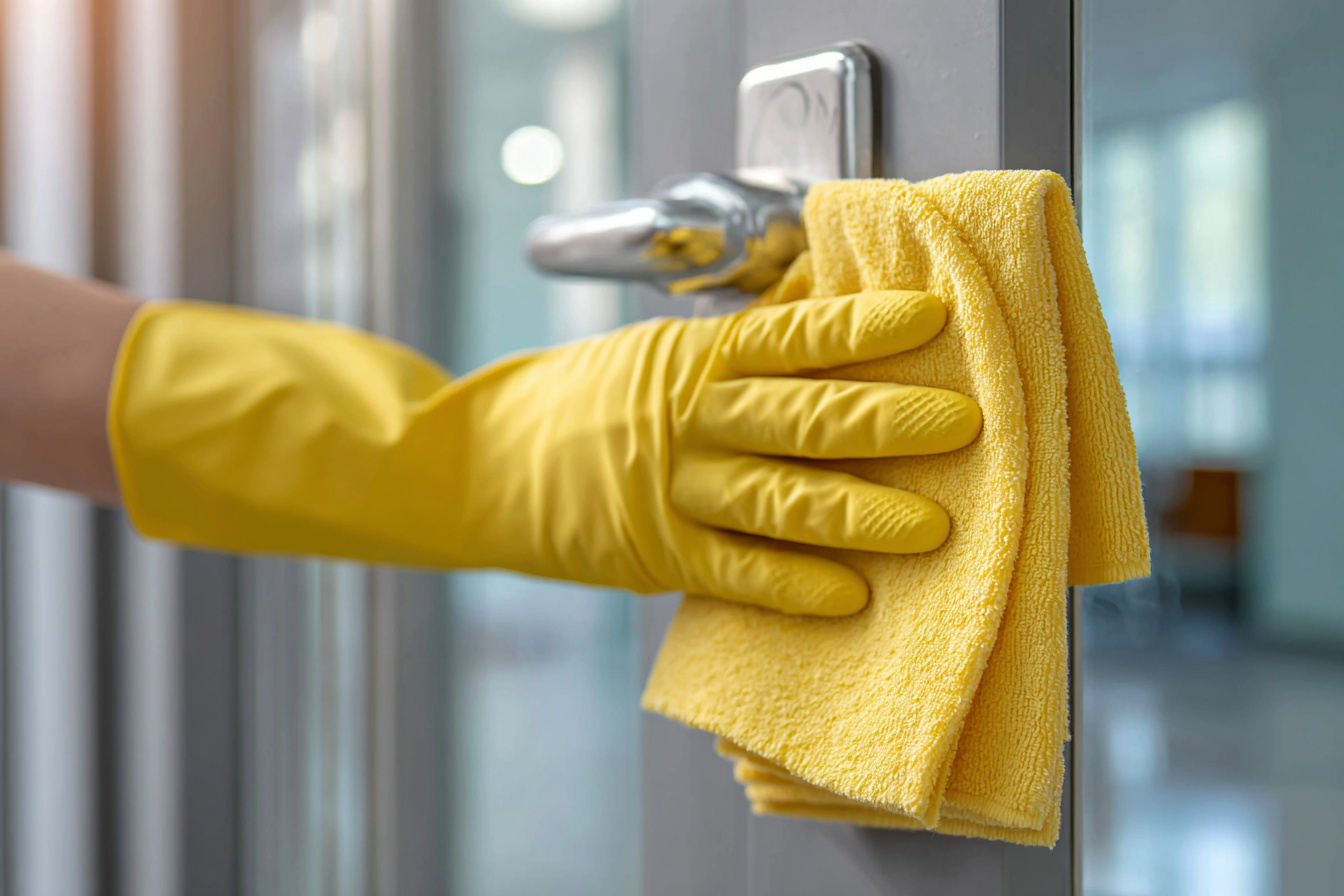
- Clean and disinfect high-touch points (handles, switches, taps, shared tech)
- Clean desk/table surfaces (spot-clean plus targeted disinfection)
- Clean sink area (tap handles, basins, splashback)
- Spot-clean visible marks on doors, chair backs, and teaching touchpoints
- Vacuum or sweep floors; spot mop spills and sticky areas
- Deal with spills/contamination promptly using the correct procedure
Weekly classroom cleaning checklist
- Full clean and disinfect of desks/tables (including edges/undersides as needed)
- Detailed high-touch clean: door plates, cupboard handles, railings
- Clean chairs (backs, seats, legs) and wipe frequently handled plastic items
- Clean teaching equipment: phones, keyboards, mice, remote controls, screens (safe method)
- Damp dust shelves, ledges, skirting boards and window sills
- Deep clean sink area; descale where required (per site plan)
- Thorough floor clean: vacuum edges; full mop for hard floors
- Clean internal glass (as needed) and remove fingerprints from partitions
- Launder/replace cloths, mop heads and check consumable stock
Daily classroom cleaning checklist: step-by-step
A strong daily routine is built around high-frequency touchpoints, waste and floors, in that order.
1) Prepare the space safely
- Ventilate if possible (especially after using chemicals)
- Put up a “wet floor” sign where relevant
- Wear PPE as required (gloves as a minimum for most tasks; eye protection for splash risks)
- Assemble colour-coded cloths, mop, waste bags and products before you start
Professional tip: Preparation reduces shortcuts. Shortcuts are where standards slip.
2) Remove waste and refresh consumables
- Empty general waste bins; replace liners
- Check for food waste and remove promptly (especially in early years)
- Wipe bin lids and touch points if needed
- Restock:
- Soap and paper towels (where applicable)
- Tissues
- Hand sanitiser stations (if used on site)
3) High-touch disinfection pass (priority task)
Focus on the surfaces most linked to frequent hand contact:
Entry and movement points
- Door handles, push plates, door edges (especially at pull height)
- Light switches
- Handrails (if within the classroom space)
Learning and teaching touchpoints
- Teacher desk area (phone, keyboard/mouse, drawer handles)
- Shared devices (tablets, headphones, keyboards) — use a method safe for electronics
- Interactive board controls and remotes (where appropriate)
Welfare and hygiene points
- Sink taps, soap dispensers, splashback areas
- Paper towel dispensers
Apply product according to instructions and allow contact time.
4) Desks and tables: clean first, then disinfect where needed
- Remove obvious debris (paper bits, dried glue)
- Clean surfaces with detergent solution
- Disinfect:
- Shared tables (group work)
- Desks in early years / SEN environments where hand-to-mouth risk is higher
- After food activities, science practicals, or messy play
Avoid over-wetting. Excess moisture can damage laminated surfaces and encourage swelling around edges.
5) Spot-clean “hidden in plain sight” surfaces
These are often missed because they’re not “flat surfaces”:
- Chair backs and front edges (especially in primary)
- Desk edges and undersides (where younger pupils grip)
- Cupboard and drawer handles
- Coat peg areas and lockers (touch-heavy zones)
6) Sink and wet area quick clean
Even in classrooms (not just washrooms), sink areas become high-risk due to moisture:
- Clean basins and taps
- Check for soap build-up
- Wipe the surrounding countertop and splashback
- Use the correct colour-coded cloth for this zone
7) Floors: remove debris, then clean where needed
- Vacuum carpets using a well-maintained machine (HEPA filtration is ideal for reducing fine dust recirculation)
- Sweep hard floors (or vacuum) before mopping
- Spot mop sticky patches, entry areas and around bins
- Don’t “flood mop” — controlled damp mopping is safer and dries faster
8) Spills and contamination: follow a defined procedure
For blood or body fluids, schools should have a clear response plan (often aligned to infection prevention practices):
- Isolate the area
- Use appropriate PPE
- Remove bulk material safely
- Use an appropriate disinfectant for the incident type (and follow product instructions precisely)
- Dispose of waste safely per site procedure
- Record the incident if your school/contract requires it
Weekly classroom cleaning checklist: step-by-step
Weekly tasks prevent gradual build-up that daily spot cleaning won’t catch.
1) Full high-touch detail clean (beyond the obvious)
- Door frames around handles (fingerprint zones)
- Cupboard edges and handles
- Light switch surrounds
- Chair backs and seat edges throughout the room
- Shared storage boxes and handles (especially in EYFS)
2) Desks and tables: the “edges and undersides” pass
Weekly, take the time to clean:
- Table edges (front lip)
- Undersides where pupils rest hands or stick gum
- Legs and support rails
3) Dust control (reduces allergens and improves appearance)
Damp dust rather than dry dust (to avoid spreading particles):
- Window sills and ledges
- Shelving tops
- Skirting boards
- Radiator fronts (where safe and accessible)
4) Teaching equipment and shared resources
- Clean and disinfect shared devices safely (no over-spraying)
- Wipe plastic resources, trays, and frequently handled learning tools
- For soft toys/fabrics used in early years: follow a laundering or cleaning schedule and remove damaged items that can’t be effectively cleaned
5) Floors: full clean
- Vacuum edges and corners thoroughly
- Mop hard floors fully using the correct chemical dilution
- Check for gum, stuck-on residue, and scuffs (address with appropriate methods that won’t damage floor finish)
6) Reusable cleaning materials: reset the system
Weekly is where you protect standards long-term:
- Launder microfibre cloths correctly (and separate by use area where required)
- Replace worn cloths and mop heads
- Clean and dry buckets, spray bottles, and dosing equipment
- Check stock of consumables so teams aren’t forced into “making do”
Optional: monthly or end-of-term deep-clean tasks
While your focus is daily and weekly, most schools also benefit from planned periodic tasks:
- High-level dusting (tops of cupboards, vents where accessible)
- Detailed chair and table leg clean
- Internal window clean and partition detail
- Carpet extraction/periodic deep clean (as needed)
- Storage clear-outs (wipe shelving before restocking)
- Floor maintenance aligned to surface type (scrub and recoat where appropriate)
High-touch points in a classroom
If you only have time to disinfect a shortlist, start here:
- Door handles and push plates
- Light switches
- Desk/table edges
- Chair backs (especially primary)
- Teacher keyboard/mouse/phone
- Shared devices (tablets, headphones, keyboards)
- Tap handles and soap dispensers
- Drawer and cupboard handles
- Whiteboard markers and frequently shared stationery pots
- Bin lids and pedal bars (if present)
This list is ideal for risk-based cleaning schedules used by contractors and site teams.
Choosing products and equipment for UK schools
An effective classroom cleaning routine is as much about fit for purpose as it is about frequency.
What “school-suitable” looks like
- Clear instructions for dilution and contact time
- Appropriate disinfectant claims aligned to recognised test standards (commonly referenced in industry for bactericidal/virucidal performance)
- Options that consider fragrance sensitivity (strong scents can be a genuine issue for some pupils and staff)
- Microfibre cloths and flat mops to improve soil removal and reduce chemical reliance
- Dosing systems to reduce errors, waste and overuse
In practice, many UK sites standardise a small range of products:
- A general-purpose detergent for routine cleaning
- A disinfectant for high-touch and incident response
- A glass/multi-surface product where needed
- A safe descaler for sink areas (used to schedule, not ad hoc)
How leading suppliers support consistency: teams like Express Cleaning Supplies typically focus on making routines repeatable, providing colour-coded systems, straightforward dilution guidance, and COSHH-ready product information so schools and contractors can maintain standards without guesswork.
Making the checklist stick: roles, records and accountability
A checklist only works if it’s realistic and assigned properly.
Who does what in a school setting?
- Cleaning team/contractor: core daily and weekly cleaning tasks, floors, waste, high-touch disinfection, wash areas
- Teaching staff: maintaining desk tidiness, managing clutter, prompt reporting of spills/soiling, and encouraging pupil habits that reduce mess
- Site team: maintenance issues that affect hygiene (leaks, ventilation faults, damaged surfaces), periodic tasks, safe storage support
Simple documentation that raises standards
- A room-by-room task sheet (daily and weekly)
- A sign-off box (initials + date)
- A short “issues log” (e.g., broken soap dispenser, recurring spill areas, stock low)
- Periodic supervisor checks (quick visual plus targeted touchpoint checks)
Contractors can also build in quality assurance with structured inspections, practical, not punitive.
FAQs: Classroom cleaning checklist questions schools ask
How often should a classroom be cleaned?
As a baseline, classrooms should follow a daily classroom cleaning checklist (waste, high-touch points, desks as needed, floors) plus a weekly classroom cleaning checklist for detailed work and dust control. Higher-risk areas (early years, SEN, food activities) may need extra daily disinfection of tables and shared items.
What’s the difference between a classroom cleaning routine and a deep clean?
A classroom cleaning routine is regular, repeatable work that controls hygiene day to day. A deep clean is periodic and tackles build-up and hard-to-reach areas (high-level dust, detailed furniture, periodic carpet cleaning, and floor maintenance).
Do classrooms need disinfecting every day?
Not “every surface, every day”. Daily disinfection is most effective when targeted to high-touch points and shared surfaces. Routine cleaning with detergent remains essential because disinfectant performance drops on dirty surfaces.
What are the most commonly missed high-touch points?
Chair backs, desk edges, cupboard handles, drawer pulls, remote controls, shared stationery pots, tablet cases, and bin lids are frequently missed because they don’t look visibly dirty.
What’s the safest way to clean shared electronics like tablets and keyboards?
Avoid spraying liquids directly onto devices. Use a lightly dampened cloth (appropriate to the manufacturer guidance) and focus on touch areas. Keep products controlled to prevent over-wetting and damage.
How can schools reduce cleaning workload without lowering standards?
Reduce clutter, use wipeable storage, standardise a small product range, implement colour coding, and build cleaning into room set-up (clear desks at the end of the day, manage shared resource storage). Consistency saves time.
Final thoughts
A healthier school year is built on everyday disciplines: prioritising high-touch points, keeping desks and shared resources under control, managing waste, and maintaining floors and dust levels. This classroom cleaning checklist is designed to be practical not idealistic and to support a consistent, auditable classroom cleaning routine for UK schools and the cleaning professionals who support them.
If you want the checklist to work long-term, keep it simple, assign responsibilities clearly, and choose products and systems that help teams do the right thing every day, even when the timetable is tight.