



Classrooms take more punishment than most areas of a school. A room can start the day clean, then collect chalk dust, pencil shavings, glue residue, paint splashes, muddy footprints, lunch crumbs, ink marks and spillages before the final lesson ends. These everyday classroom cleaning challenges are not dramatic, but they do build up quickly.
At Express Cleaning Supplies, we see classroom cleaning as a practical mix of routine, product choice and fast response. The aim is not to make learning spaces feel clinical. It is to keep desks, floors, carpets, storage areas and shared surfaces clean enough to support learning, reduce complaints and protect school assets. Our range includes classroom cleaning supplies such as microfibre cloths, general surface cleaners, HEPA vacuums, stain removers, floorcare products, mop systems and cleaning trolleys for school site teams.
Why classroom cleaning needs a different approach
Classrooms are not cleaned like corridors, offices or washrooms. They contain mixed surfaces, frequent touchpoints and a high level of daily clutter. As a result, cleaners often work around chairs, bags, learning displays, storage trays and equipment.
In practice, the best classroom cleaning routine starts with control. Schools need simple methods that staff can repeat reliably, especially when cleaners have limited time after pupils leave. HSE guidance also highlights that cleaning can introduce slip and trip risks if floors are left wet, cables cross routes or staff use unsuitable methods for the floor surface.
For this reason, classroom cleaning should focus on three priorities:
- Remove dry debris and dust without spreading it.
- Treat stains quickly before they become permanent.
- Match chemicals and equipment to the surface, not just the mess.
That last point matters. A product that works well on a laminate desk may be wrong for carpet, soft seating or a polished floor.
Chalk dust, pencil shavings and fine debris
Chalk dust may be less common in newer classrooms, but fine dry dust is still a daily issue. Pencil shavings, paper fibres, display dust and dry wipe residue all settle on ledges, shelves and floors. If staff simply brush them away, they often move the dust into the air or onto another surface.
The right method
Start with dry soil control, then damp wiping. Vacuum floors and edges first where possible, then use a lightly damp microfibre cloth on desks, ledges and skirting. Avoid over-wetting surfaces, especially near sockets, display boards and paper-based materials.
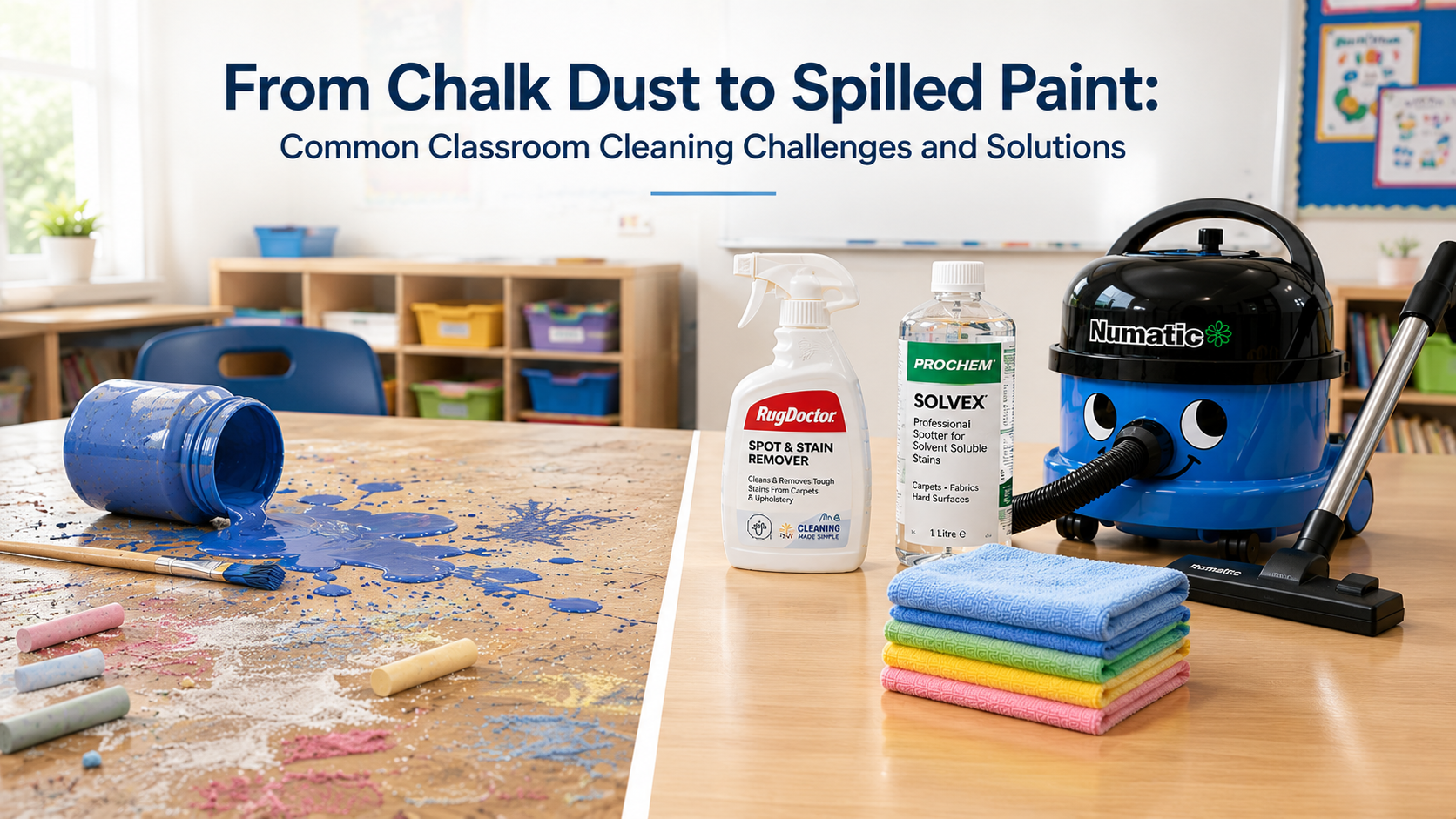
A HEPA vacuum can help where fine dust is a recurring issue. The Numatic NVR170 HEPA Vacuum stocked by Express includes H13 filtration and HepaFlo bags designed to lock in dust during disposal, which makes it a useful option for classrooms, libraries and allergy-sensitive areas.
For wiping, microfibre cloths are often the most reliable daily tool. Our microfibre cloth range includes colour-coded options, which helps schools separate classroom cleaning from washrooms and catering areas. Colour coding reduces cross-contamination risk and makes routines easier for mixed cleaning teams to follow.
Paint spills and art-room accidents
Paint spills are common in primary classrooms, art rooms and after-school clubs. The cleaning method depends on the paint type, the surface and how quickly staff respond.
Water-based paint on a desk is usually manageable with prompt wiping. However, paint on carpet, upholstery or textured flooring needs more care. Rubbing can drive pigment deeper into fibres, while harsh solvents can damage plastics, finishes or fabrics.
The right method
Blot first, never scrub aggressively. Remove excess paint with a scraper or absorbent cloth, working from the outside of the stain inward. Then use a suitable stain remover after testing the surface in a discreet area.
For specialist spot treatment, Prochem Solvex is one of the products we stock for oil-based paint, emulsion paint, solvent-soluble ink and similar stains on carpets, fabrics and hard surfaces. The product guidance advises pre-testing and avoiding over-application, which is especially important in schools where surfaces vary from room to room.
For broader stain coverage, the Rug Doctor Spot & Stain Remover range sold through Express lists water-based paint, crayon, dirt, mud, clay, grass, ink and permanent marker among the types of marks it can tackle. This makes it a useful product to hold for classrooms where the mess is rarely predictable.
Ink, marker pen and glue residue
Ink and marker stains are usually made worse by delay. Once ink settles into a porous surface, it becomes harder to remove. Glue residue creates a different problem because it collects dust and leaves desks feeling tacky even after routine wiping.
The right method
For ink, avoid spreading the stain. Use a targeted spot treatment and blot carefully. For glue, soften residue first with a compatible cleaner, then remove it mechanically with a non-scratch scraper or cloth.
General-purpose surface cleaners work well for daily desk maintenance, but schools should not rely on them for every stain. Eco-Logik Multi Surface Cleaner, for example, is positioned for desks, tables, doors and other washable surfaces, and it works on dirt, grease and grime without smears. That makes it a good routine classroom product, but tougher ink or paint marks may still need a specialist stain remover.
In addition, Multi Clean General Purpose Cleaner is a ready-to-use multi-surface cleaner suitable for daily cleaning of water-washable hard surfaces including glass, laminate, stainless steel, ceramic tiles and textured floors. That kind of ready-to-use product can be useful where staff need a simple wipe-down option for everyday classroom marks.
Mud trails, wet floors and corridor carry-in
Mud trails usually start outside the classroom. Wet shoes move soil from playgrounds, entrances and corridors into learning areas, especially after breaktime or PE. If mud dries before cleaning, it becomes dust. If cleaners mop over it too quickly, it can smear across the floor.
The right method
Let heavy mud dry slightly where safe, then remove as much dry soil as possible before damp cleaning. Use a vacuum, lobby dustpan or floor sweeper first. Then mop or machine clean using a product matched to the floor type.
For larger areas, manual mopping can be too slow and may leave the floor damp for too long. HSE guidance advises using the right cleaning method, leaving smooth floors dry after cleaning where possible, or restricting access until floors are dry.
Compact floor machines can help where schools need faster turnaround. The i-mop Lite range stocked by Express is designed for tight and congested spaces, with the agility of a mop and the cleaning performance of a scrubber dryer. That can suit classrooms, small halls, dining spill zones and tight routes where a larger machine would be impractical.
Food crumbs, sticky drinks and lunch debris
Food in classrooms is not always avoidable. Breakfast clubs, wet play, packed lunches, reward sessions and after-school activities all create crumbs and sticky residues. Left overnight, these marks can attract pests, create odours and make surfaces unpleasant the next morning.
The right method
Remove food debris first, then clean the surface. Do not spray directly into heavy crumbs or sticky liquid. Wipe away the bulk, then apply the correct cleaner and allow it enough contact time to lift residue.
For daily desk and table work, a good routine would include microfibre cloths, a general surface cleaner and a clear colour-coded system. Blue cloths are commonly used for general areas, while other colours should be reserved for washrooms, catering or specialist zones. Express stocks colour-coded microfibre options to support this type of hygiene control.
If food or drink has reached the carpet, treat it as a stain rather than a surface wipe. Blot, do not rub. Then use a suitable carpet stain product or spotting kit.
Carpet stains and soft seating
Many schools have carpeted reading corners, libraries, offices or nurture rooms. These spaces improve comfort, but they also hold dust, crumbs and stains. Soft seating creates the same issue, especially where pupils eat, drink or use art materials nearby.
The right method
For small stains, spot treatment is usually enough. For repeated stains or odour, schedule periodic carpet cleaning between terms.
The Prochem PSK Professional Spotting Kit sold through Express is designed for precise stain removal on carpets and upholstery, which makes it relevant for schools with mixed soft furnishings and carpeted areas. For wider carpet work, Express also carries carpet cleaning machines, detergents and dry cleaning products designed to tackle stains, odours and high-traffic areas.
The practical point is timing. A stain treated on the same day usually needs less chemical, less labour and less disruption than one discovered at the next holiday deep clean.
Classroom cleaning supplies that are worth standardising
Schools often lose time because every cleaning cupboard holds a slightly different mix of products. Standardising the basics reduces confusion and makes reordering easier.
A sensible classroom cleaning kit includes:
- HEPA or microfilter vacuum for dust and debris
- Microfibre cloths in a clear colour-coded system
- Ready-to-use general surface cleaner
- A targeted stain remover for ink, paint and food marks
- Spotting kit for carpets and upholstery
- Lobby dustpan, brush or floor sweeper
- Microfibre mop heads and suitable floor cleaner
- Disposable gloves and PPE where the task requires it
- Warning signs for wet floors
- A compact trolley or caddy for daily rounds
Our Housekeeping, Floorcare, Carpet Cleaning, Cleaning Machines and PPE ranges cover these everyday classroom needs without schools having to build a product list from scratch.
Protocols matter as much as products
Even the best school cleaning products will underperform if staff use them inconsistently. A clear classroom protocol helps cleaners work quickly without guessing.
A practical daily routine might look like this:
- Remove large waste and obvious debris.
- Vacuum or sweep dry soil before damp cleaning.
- Damp dust ledges, desks and shared touchpoints.
- Spot treats fresh stains immediately.
- Mop or machine clean hard floors where needed.
- Leave floors dry or restrict access until safe.
- Record recurring issues such as leaks, stains or damaged surfaces.
COSHH controls should also sit behind the routine. HSE guidance for cleaners highlights safe storage, good working techniques, ventilation and PPE such as gloves, aprons or eye protection where needed. In schools, that also means storing products securely away from pupils and keeping Safety Data Sheets accessible to staff.
Common mistakes schools should avoid
The first mistake is rubbing stains too hard. This can spread ink, push paint deeper into fibres or damage surface finishes.
The second mistake is using one product for every job. Classroom cleaning covers dust, food, mud, ink, glue, paint and carpet stains. No single product handles all of that properly.
The third mistake is wet cleaning too early. Dry debris such as chalk dust, pencil shavings and dried mud should be removed before damp cleaning. Otherwise, cleaners create smears and residue.
The fourth mistake is ignoring equipment maintenance. Vacuums need bags and filters. Mops need laundering or replacement. Spray bottles need clear labels. Floor machines need pads, brushes and squeegees kept in working order.
FAQs
What is the best way to clean classroom desks?
Remove loose debris first, then wipe with a suitable multi-surface cleaner and a microfibre cloth. For sticky residue or glue, allow the cleaner time to soften the mark before wiping.
How should schools remove paint from carpets?
Blot excess paint, avoid scrubbing and use a suitable stain remover after testing the carpet. Products such as Prochem Solvex are designed for paint and solvent-soluble stains, but staff should always follow the label and pre-test first.
What helps with chalk dust and fine classroom dust?
Use a HEPA or microfilter vacuum, then damp dust with microfibre cloths. Dry dusting alone can move particles into the air or onto nearby surfaces.
How do you stop mud trails spreading through classrooms?
Use entrance matting, remove dry soil before mopping and clean muddy routes promptly. If floors are wet after cleaning, restrict access until they are dry.
What classroom cleaning products should schools keep in stock?
Most schools need microfibre cloths, a general surface cleaner, a suitable floor cleaner, stain removers, a HEPA vacuum, mop systems, PPE and wet floor signs.
How can Express Cleaning Supplies help schools manage classroom cleaning?
We help schools build practical cleaning systems around real classroom messes. That means matching products to surfaces, supporting bulk ordering and helping site teams choose supplies that work across desks, carpets, hard floors and shared learning spaces. Done properly, classroom cleaning becomes quicker, more consistent and easier to manage across the full school day.