



Baby changing facilities in nurseries and early years settings are one of the more heavily scrutinised areas during an Ofsted or local authority inspection, and for good reason. Poor changing hygiene is a direct route for cross-infection between children, and inspectors expect to see consistent, documented practice, not just the right equipment sitting in the room. This checklist works through the compliance points that matter most, from surfaces through to disposal and record keeping.
Changing surfaces: what compliance actually requires
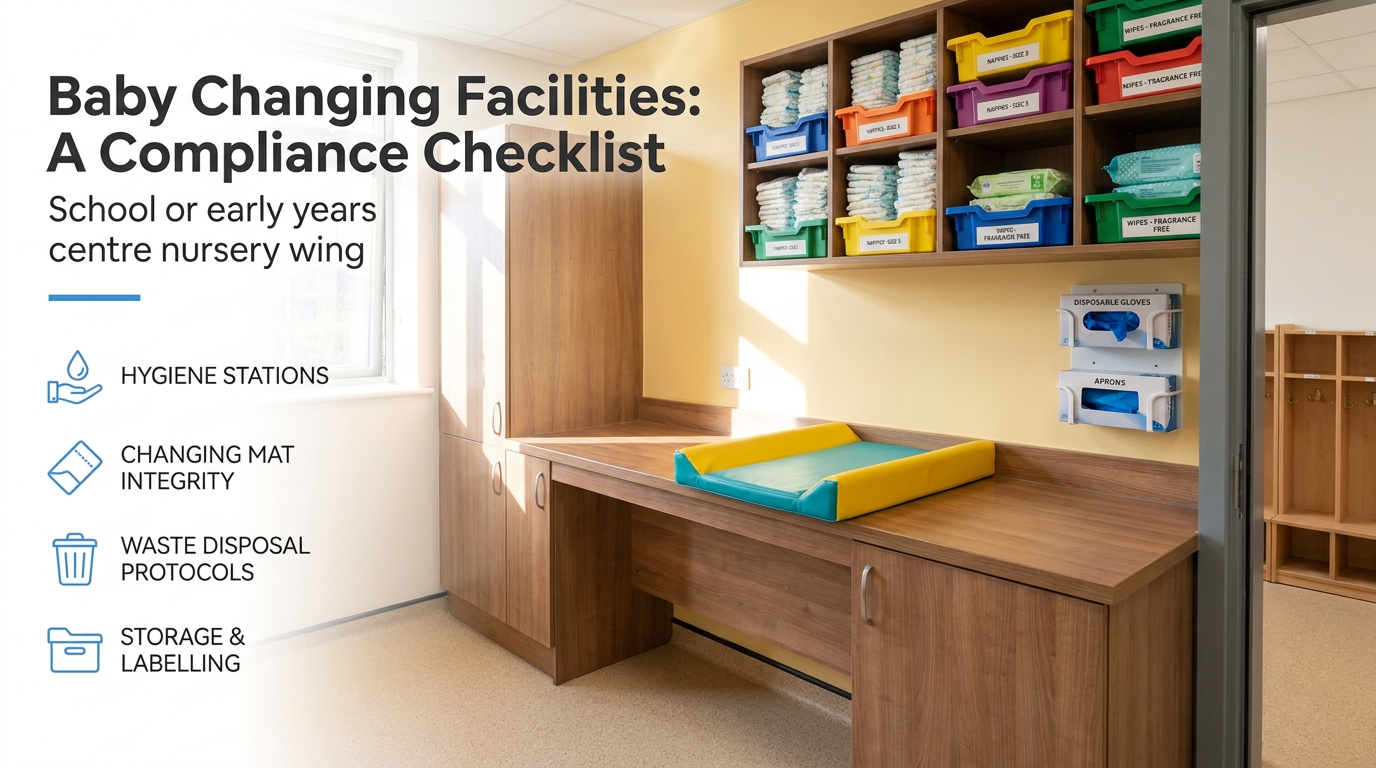
A compliant changing surface needs to be non-porous, easy to sanitise between uses, and free of splits or damage that could harbour bacteria. Ranges such as Babyminder's changing tables are built around this specifically, with smooth, moulded surfaces designed to minimise dirt traps and antimicrobial properties intended to reduce the spread of germs between changes.
Layout matters too. Vertical, wall-mounted units suit settings with limited floor space, while horizontal, freestanding models suit rooms with more room to work with, but either format needs to be positioned so staff can sanitise thoroughly between each use without contorting around fixed furniture or awkward wall gaps. Integrated safety straps are a compliance point in their own right, since a child needs to be securely held in place throughout a change, and straps that are missing, damaged or simply not used consistently are a common inspection finding.
Any changing surface in use should be checked against current UK and European safety standards, and settings should be able to show, if asked, that the equipment in use has been tested to those standards rather than assuming it's compliant because it looks similar to what's expected.
The regulatory baseline: EYFS requirements
The Early Years Foundation Stage framework sets out specific expectations for nappy changing, including changing promptly, cleaning and sanitising surfaces after every use, and staff washing their hands thoroughly before and after each change. These aren't guidance to be interpreted loosely, they're the baseline inspectors check against directly, and settings that can demonstrate a consistent, written routine tend to fare considerably better than those relying on staff simply knowing what to do.
Positioning matters under this framework too. Changing areas should be kept separate from food preparation and feeding spaces wherever the building allows, and where full separation isn't possible, a clear, followed routine for sanitising surfaces between uses for different purposes becomes the compliance safeguard in its place.
Nappy disposal: the compliance detail most often missed
Nappy disposal is a specific area worth checking carefully, since it's easy to have the right bin but the wrong process around it. Bins with secure sealing and odour-neutralising features, of the kind stocked under Express Cleaning Supplies' baby care range, reduce both odour and the risk of staff needing to touch soiled contents during disposal, but the bin still needs positioning away from feeding and food preparation areas to meet expectations properly.
Liners should be changed at least daily, more frequently in busy rooms, and collection frequency should be reviewed against actual room numbers rather than left on a fixed schedule set when the room had fewer children in nappies. A bin that's overflowing by the end of the day is both a hygiene issue and a visible sign to any visiting inspector that the disposal routine hasn't kept pace with room numbers.
PPE and single-use items
Disposable gloves should be worn for every nappy change and disposed of immediately afterwards, never reused across multiple children even within a short space of time. Changing table covers, where used, should be replaced or wiped down between every child, not left in place for a whole session, since a shared surface cover defeats much of the purpose of an easy-to-sanitise changing table underneath it.
Nappy sacks and other single-use disposal items should be stocked in sufficient quantity that staff are never tempted to double up disposal to save on liners, which is a shortcut that undermines the whole system for a saving of very little.
Sanitisers and chemical safety around children
Any sanitiser or surface cleaner used on or near a changing table needs to be suitable for use around children, with alcohol-free options generally preferred for surfaces a baby's skin will directly contact, alongside dermatologically tested wipes for cleaning the child rather than the furniture. Products described as compliant with UK hygiene standards for professional nursery use are worth prioritising over generic household equivalents, which aren't always formulated with the same skin-contact safety margin.
Whatever products are chosen, they must be stored completely out of children's reach at all times, ideally in a locked cupboard rather than a high shelf, which remains a specific and non-negotiable EYFS requirement. COSHH data sheets for every product in the changing area should be current and easily accessible to staff, not filed away in an office that isn't part of the daily routine.
Staff training and consistency
New starters and bank staff need the same level of training on changing hygiene as permanent staff, delivered before they're left responsible for changes unsupervised, not picked up informally by shadowing a colleague for a shift or two. A written one-page routine kept in the room itself, covering surface sanitising, glove changes, disposal and where the locked chemical storage is kept, gives temporary staff something concrete to follow on their first day rather than relying on memory or assumption.
It's worth revisiting this training whenever equipment or products change, not just at induction. Staff trained on one changing table model or one sanitiser brand can fall back into old habits if the setting switches suppliers without a follow-up briefing, and a routine that assumes everyone already knows what's changed is where compliance gaps tend to open up.
Working with a consistent supplier
Settings that source changing tables, disposal bins, gloves and sanitisers from a single, consistent range tend to find compliance easier to maintain than those piecing supplies together from several different suppliers. It keeps product specifications, safety documentation and staff training aligned, rather than having COSHH sheets and usage instructions scattered across several different manufacturers' paperwork. This consistency is one of the reasons nurseries increasingly manage their full baby care range, from changing furniture through to disposal and sanitising products, through a single account with a supplier such as Express Cleaning Supplies.
Record keeping and safeguarding
Beyond the practical hygiene routine, most settings keep a nappy changing record noting the time of each change and which member of staff carried it out. This isn't purely a hygiene measure, it also forms part of a setting's wider safeguarding practice, giving a clear record of care for each child through the day and flagging quickly if a child's pattern changes in a way that might need attention.
These records should be kept somewhere accessible to the room's staff day to day, not buried in a filing system that only gets checked during an inspection, and they should be retained for whatever period the setting's own safeguarding policy specifies. Reviewing this alongside the physical changing routine, rather than treating the two as separate systems, gives a more complete and more easily auditable compliance picture overall.
Building an inspection-ready checklist
The strongest compliance position isn't just following the right routine, it's being able to show it's followed consistently. A simple daily or weekly log recording that changing surfaces have been sanitised, nappy bins serviced, and PPE stock checked gives a concrete record if a concern is ever raised, and it gives temporary or new staff something specific to follow rather than relying on being told verbally on their first day.
Refresher checks two or three times a year, even for experienced staff, catch the small drift in routine that happens naturally over time, particularly around how consistently gloves are changed and how thoroughly surfaces are sanitised between children during a busy session. Settings that keep their changing equipment, disposal supplies and sanitising products consistent across every room, rather than mixing whatever happens to be in stock, generally find this kind of routine far easier to audit and to train new staff on.
FAQ
What does EYFS actually require for nappy changing? Nappies changed promptly, surfaces cleaned and sanitised after every use, and thorough handwashing by staff before and after each change, as a specific requirement under the framework.
Where should nappy disposal bins be positioned in a nursery? Away from feeding and food preparation areas, ideally foot-operated or designed to minimise hand contact, with liners changed at least daily.
Should sanitisers used near babies be alcohol-free? Alcohol-free options are generally preferred for surfaces and products that will have direct contact with a baby's skin, alongside dermatologically tested wipes for cleaning the child.
Do cleaning chemicals need to be locked away in a baby changing area? Yes. All chemicals used in the changing area must be stored completely out of children's reach at all times, ideally in a locked cupboard, as a specific EYFS requirement.
How long should nappy changing records be kept? This depends on the setting's own safeguarding and record retention policy, but records should be kept accessible to room staff day to day and retained for whatever period that policy specifies, rather than discarded once a shift ends.